
The Earned Wage Access Solutions Market it is projected to reach USD 44.25 billion by 2030.

The Earned Wage Access Solutions Market was valued at USD 26.22 billion in 2025. Over the forecast period of 2026-2030, it is projected to reach USD 44.25 billion by 2030, growing at a CAGR of 13.98%.
Request Sample
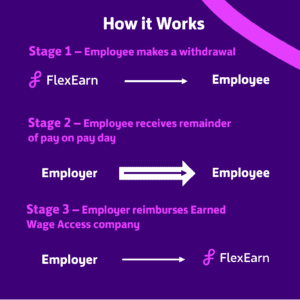
The Earned Wage Access Solutions Market is growing because workers want more control over their own money for the long run. For many years, most employees have been paid only once or twice a month, even though their daily needs do not wait for payday. Rising living costs, rent pressure, and surprise expenses have made this gap more painful for workers across industries. Earned wage access solves this problem by letting employees use the money they have already earned before the official payday. This basic need for financial flexibility is a strong long-term driver and is unlikely to fade.
A major opportunity in the Earned Wage Access Solutions Market lies in expanding access to underserved worker groups. Many hourly workers, contract staff, and gig workers still rely on expensive payday loans or informal borrowing. Earned wage access platforms can reach these groups through direct partnerships with employers, staffing agencies, and digital work platforms. There is also a strong opportunity to bundle earned wage access with simple financial wellness tools such as savings nudges, spending insights, and bill reminders.
Segmentation Analysis:
By Deployment: Cloud, On-premises
In the Earned Wage Access Solutions Market by deployment, cloud-based systems lead this segment because they are easy to set up and simple to update. Many companies prefer cloud platforms since they do not need heavy hardware or large IT teams to manage them. These systems allow employers to give workers quick access to earned pay using secure online tools. On-premises solutions still exist, mostly in organizations that want full control over data inside their own systems. However, these setups require higher costs and longer installation times.
By Organization Size: Small and Medium-sized Enterprises, Large Enterprises
When viewed by organization size, large enterprises hold the biggest share of the Earned Wage Access Solutions Market. These companies employ large workforces and often have complex payroll systems, making earned wage access a useful benefit to support employee stability. Large firms also have stronger budgets to test and roll out new financial tools at scale. Small and medium-sized enterprises, on the other hand, are becoming more open to these solutions as providers offer simple pricing and faster setup. SMEs see earned wage access as a way to compete with bigger employers without raising fixed wages. Many small businesses use it to reduce staff turnover and missed shifts.
Enquire Before Buying
By Vertical: Retail, Manufacturing, Healthcare, Transportation, Technology, Education, Hospitality, Financial Services
Across industry verticals, retail dominates the Earned Wage Access Solutions Market because it relies heavily on hourly workers who often face cash gaps between paydays. Retail employers use earned wage access to improve attendance and morale during busy seasons. Manufacturing and transportation also show steady use due to shift-based pay structures. Healthcare organizations are adopting these tools to support nurses and support staff working long hours. Technology and education sectors use earned wage access more selectively, often as part of broader benefit packages. Hospitality shows rising interest due to seasonal hiring and variable schedules.
By Wage Cycle: Weekly, Biweekly, Monthly
In the wage cycle segment, biweekly pay structures hold the largest share because they are widely used across industries. Workers on biweekly cycles often feel a strong need for early access to earned income to manage mid-cycle expenses. Weekly wage cycles already offer frequent pay, so demand for earned wage access grows at a slower pace there. Monthly wage cycles, however, create the longest waiting period for workers, increasing financial stress. Employees paid monthly are more likely to seek tools that help them spread income evenly across weeks. Providers are designing solutions that work smoothly with longer pay gaps. The largest in this segment is Biweekly, while the fastest growing during the forecast period is Monthly, driven by employee demand for better cash flow control.
By Features: Real-time Access, Payroll Integration, No-fee or Low-fee Options, Analytics and Reporting, Financial Literacy Tools
By features, real-time access to earned wages holds the largest share because it directly solves the timing gap between work and pay. Employees value seeing and using their earnings almost instantly. Integration with payroll systems supports smooth operation but is often seen as a backend need rather than a user-facing benefit. No-fee or low-fee options are gaining attention as workers become more cost-aware. Analytics and reporting help employers understand usage patterns, while financial literacy tools support long-term money habits. Among these, education-focused tools are being added more often as platforms mature.
Regional Analysis:
Regionally, North America leads the Earned Wage Access Solutions Market due to early adoption, strong payroll infrastructure, and high awareness among employers. Europe follows with steady growth, supported by worker protection policies and digital banking access. Asia-Pacific shows rapid expansion as large working populations adopt mobile-based pay tools. South America sees gradual uptake, mainly in urban employment hubs. The Middle East & Africa region is still emerging but shows promise as digital payroll systems spread. The largest in this segment is North America, while the fastest growing during the forecast period is Asia-Pacific, driven by workforce scale and rising fintech use.
Latest Industry Developments:
- Earned wage access market leaders focus on strategic partnerships and ecosystem integration: Companies in the Earned Wage Access Solutions Market are increasingly forming strategic partnerships with payroll providers, HR platforms, and financial service ecosystems. This trend allows seamless integration into existing employer systems, reducing implementation friction and expanding the reach of solutions across various industries. By embedding their offerings within broader workforce management tools, providers enhance user experience and drive wider adoption by making earned wage access part of routine HR operations. These connections also help standardize data flow and support scalability for larger enterprise deployments. This collaborative approach fosters a more connected market presence and deeper penetration into digital payroll environments.
- Diversification of value-added benefits to boost engagement: Providers are trending toward expanding feature sets beyond basic wage release to include financial wellness elements and employee support tools. This diversification helps differentiate offerings by giving workers budgeting, savings incentives, and educational content alongside early pay access. By broadening the value proposition, companies attract employers seeking comprehensive workforce financial health solutions. This trend also encourages recurring usage from employees, creating stronger product stickiness. Features that support financial literacy and money management are increasingly seen as essential add-ons that enrich engagement and position earned wage access as a core employee benefit rather than a standalone service.
- Pricing flexibility and adaptive models to capture new segments: A growing trend in the market is the shift toward flexible and adaptive pricing structures that appeal to diverse employer sizes and needs. Instead of a one-size-fits-all fee, providers offer tiered, usage-based, subscription, or employer-sponsored models to align with client budget constraints and workforce dynamics. This flexibility makes solutions accessible to small and medium-sized enterprises while still catering to large enterprise demands. Customized pricing helps companies compete in price-sensitive markets and accelerates adoption across sectors with varying economic conditions. By innovating around cost structure, providers can broaden market share and attract clients previously deterred by rigid pricing schemes.

