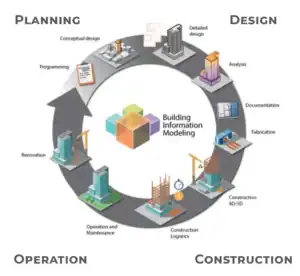
The Building Information Modeling Market is projected to reach a market size of USD 23.6 billion by the end of 2030.

The Building Information Modeling Market was valued at USD 9.53 billion in 2025 and is projected to reach a market size of USD 23.6 billion by the end of 2030. Over the forecast period of 2026-2030, the market is projected to grow at a CAGR of 19.88%.
Request Sample
The Building Information Modeling Market has grown because cities keep getting bigger and buildings keep getting more complex. One long-term driver behind this growth is the need for better planning and cost control in construction projects. Builders, designers, and owners all want fewer mistakes, less waste, and clearer plans before construction starts. Building Information Modeling helps by creating a digital version of a building that shows how every part fits together. This makes it easier to spot problems early, save materials, and avoid delays. Over time, governments and private companies have also pushed for safer buildings and smarter infrastructure, which further supports adoption.
A strong opportunity in the market comes from the growing focus on sustainable buildings. Energy use, carbon emissions, and resource efficiency are now major concerns for both governments and customers. Building Information Modeling can test different designs to see how much energy a building will use over time. Designers can compare materials, lighting, and layouts to choose options that reduce waste and lower energy costs. This makes it easier to meet green building standards and certifications. As sustainability rules become stricter, more projects will need these digital tools from the planning stage onward. This opens new opportunities for software providers, service firms, and training companies that support sustainable construction practices.
Segmentation Analysis:
By Deployment: On-premise, Cloud
The Building Information Modeling Market by deployment shows clear differences in how users prefer to store and manage digital building data. On-premise systems remain widely used because they give firms full control over data, security rules, and software customization. Large construction groups and public agencies often favor this setup since it fits strict internal policies and long approval chains. These users value stability over speed and prefer systems that work even with limited internet access. Cloud deployment, however, is changing how teams interact with models. Cloud platforms allow instant updates, shared access, and easier coordination between offices and job sites.
By Building Type: Commercial, Residential
When viewed by building type, the Building Information Modeling Market reflects how different projects use digital planning tools. Commercial buildings, such as offices, hospitals, and shopping centers, rely heavily on detailed coordination. These structures often involve complex systems like advanced electrical layouts, safety planning, and long-term operational tracking. Because of this complexity, commercial projects use modeling tools throughout design, construction, and later facility use. Residential buildings, while simpler in structure, are seeing growing interest in digital modeling as housing demand increases.
Enquire Before Buying
By Component: Solution, Service
By component, the Building Information Modeling Market divides into software solutions and supporting services. Solutions include core platforms used to create, view, and manage digital building models. These tools form the base of most projects and are essential for daily design and coordination work. Many firms invest heavily in solutions because they are used across multiple projects and teams. Services, on the other hand, include consulting, training, integration, and ongoing support. As tools become more advanced, users often need guidance to use features correctly and align them with existing workflows.
By Application: Planning & Modelling, Construction & Design, Asset Management, Building System Analysis & Maintenance Scheduling
Application-based analysis highlights how modeling tools support different project stages. Planning & Modelling remains central because it sets the foundation for all later work. Early digital planning helps teams test layouts, adjust dimensions, and align goals before physical work begins. Construction & Design applications focus on coordinating trades and visualizing how parts come together during building.
By End-User: Architects/Engineers, Contractors, Others
End-user segmentation shows how different professionals apply modeling tools. Architects and engineers use these platforms to explore ideas, refine structures, and align technical details early. Their work often sets the direction for the entire project, making digital accuracy critical. Contractors focus on execution, using models to plan sequences, manage resources, and avoid clashes on-site. They rely on clear visuals to coordinate labor and materials. Other users include owners, facility managers, and consultants who interact with models for review, approval, and long-term planning. As digital tools become more accessible, non-technical users also engage with simplified model views. Contractors are increasingly adopting these systems as construction timelines tighten and coordination demands rise.
Regional Analysis:
Regional analysis of the Building Information Modeling Market shows varied adoption patterns. North America leads due to early technology acceptance, strong software ecosystems, and widespread digital standards. Many large projects in this region rely on modeling tools from planning through operation. Europe follows with structured regulations and a focus on efficient public infrastructure. Asia-Pacific shows rapid change as urban growth drives demand for faster and more organized construction methods. Governments and private developers in this region increasingly support digital workflows to manage large-scale projects. South America is gradually adopting modeling tools, especially in urban commercial developments. The Middle East & Africa region uses these systems mainly for large landmark projects and smart city initiatives. As investment grows, adoption expands beyond flagship developments. Largest in this segment is North America, and Fastest Growing During The forecast period is Asia-Pacific.
Latest Industry Developments:
- Adoption of Integrated Cloud-Based Collaboration Platforms: Companies are increasingly shifting toward integrated cloud-based collaboration platforms to enhance their market reach. This trend supports real-time sharing of building models, enables distributed teams to work simultaneously, and reduces delays caused by manual file exchanges. By embracing these platforms, firms improve accessibility for all stakeholders, including designers, contractors, and owners. This shift also simplifies software updates and lowers infrastructure costs for users. The move toward cloud ecosystems reflects broader digital transformation efforts, helping organizations remain competitive in a market where speed, flexibility, and seamless communication are becoming key factors in securing new projects and retaining clients.
- Expansion of Value-Added Services and Training Solutions: There is a noticeable trend of expanding value-added services such as customized training, implementation support, and consulting packages to capture a larger customer base. As organizations adopt modeling tools, the need for effective onboarding and tailored workflows grows, prompting service-focused offerings that go beyond basic software delivery. This approach helps users maximize the benefits of complex systems and encourages long-term subscriptions. By enhancing support frameworks and educational resources, vendors can build stronger relationships with clients, reduce churn, and attract firms that prioritize comprehensive assistance alongside technology investments.
- Integration of Advanced Analytics and AI Capabilities: The integration of advanced analytics and artificial intelligence into modeling platforms is gaining momentum as a strategy to broaden user engagement. These enhancements enable automated detection of design conflicts, predictive performance insights, and optimization suggestions that simplify decision-making during construction and beyond. By embedding intelligent features, tools become more proactive, helping project teams identify issues early and forecast maintenance needs. This trend aligns with demand for smarter, data-driven planning and supports outcomes that traditional modeling alone could not achieve. As a result, solutions that offer analytics and AI functionalities are increasingly preferred in competitive bids for complex, high-value projects.