
The global microseismic monitoring technology market is experiencing significant growth driven by increasing demand for continuous subsurface observation across energy and civil engineering operations. Microseismic monitoring is an advanced geophysical technique designed to detect, locate, and evaluate low-magnitude seismic events induced by human activities or natural subsurface stress changes.
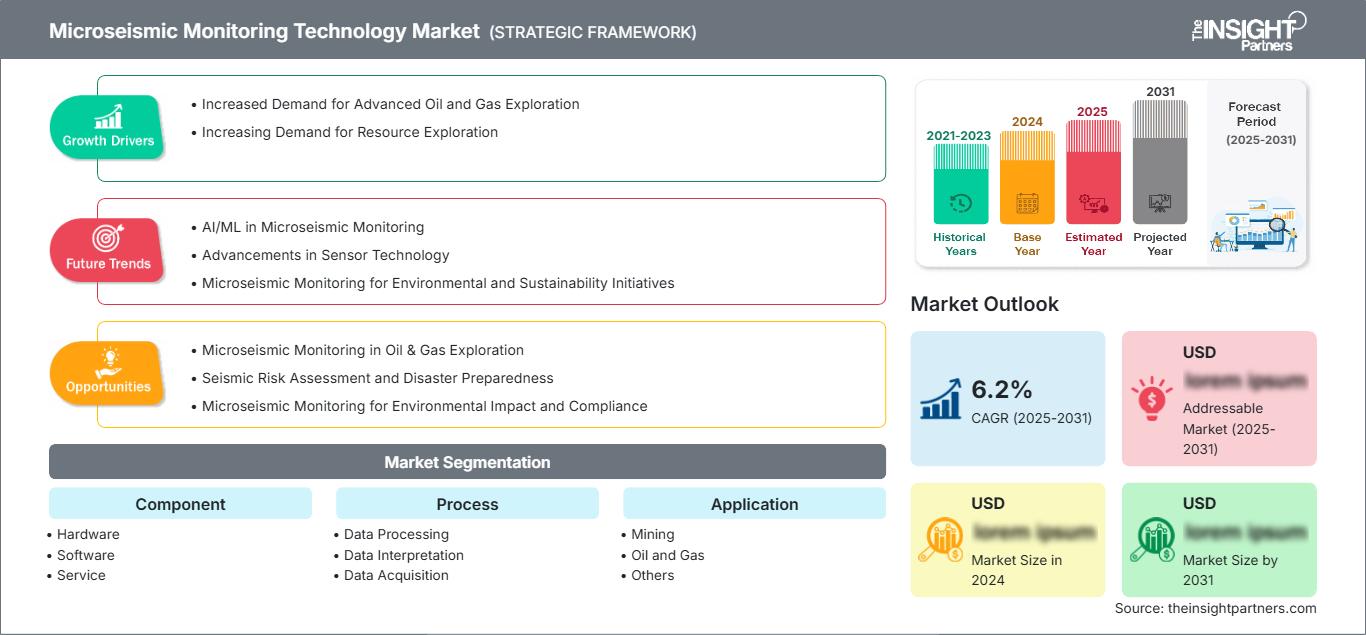
The global Microseismic Monitoring Technology Market size is projected to reach US$ 2,065.38 million by 2034 from US$ 579.4 million in 2025. The market is anticipated to register a CAGR of 17.22% during the forecast period 2026-2034.
Download Sample Report@ https://www.theinsightpartners.com/sample/TIPRE00006644
Key Drivers
Several core factors are propelling the steady expansion of the microseismic monitoring technology market:
- Expanding Energy Transition and Geothermal Projects: As countries transition toward cleaner energy sources, enhanced geothermal systems (EGS) are gaining traction. Microseismic systems are essential for mapping hydraulic stimulation in geothermal reservoirs and preventing induced seismicity.
- Rapid Scale-up of Carbon Capture, Utilization, and Storage (CCUS): Regulatory frameworks worldwide require robust subsurface validation for CO2 injection sites. Microseismic arrays provide real-time assurance of caprock integrity and plume movement.
- Optimization of Unconventional Oil and Gas Reservoirs: Hydraulic fracturing operations rely on microseismic data to understand artificial fracture geometry, optimize well spacing, avoid caprock breaches, and maximize hydrocarbon recovery.
- Strict Environmental and Safety Regulations: Heightened regulatory scrutiny regarding induced earthquakes in mining and energy extraction mandates continuous seismic activity tracking to protect surrounding communities and infrastructure.
Strategic Opportunities
The evolving geophysical landscape creates distinct commercial opportunities for technology providers:
- AI and Machine Learning Integration: Deploying machine learning algorithms for automated wave-picking and event classification dramatically reduces data processing delays from days to minutes.
- Distributed Acoustic Sensing (DAS) Adoption: Replacing or supplementing conventional geophones with fiber-optic DAS cables enables high-density, continuous monitoring along the entire length of boreholes.
- Mining Rockburst and Slope Stability Monitoring: Underground and deep pit mining operations increasingly utilize microseismic monitoring to provide early warning indicators for rockbursts, preventing cataclysmic failures.
Market Segmentation
The microseismic monitoring technology market is segmented across multiple operational and technical dimensions:
By Component
- Hardware: Geophones, accelerometers, data acquisition units, and fiber-optic sensors (currently holding the largest market share due to hardware deployment requirements).
- Software: Real-time data processing, waveform analysis, and 3D/4D visualization suites.
- Services: Installation, maintenance, data interpretation, and field consulting (expected to register the fastest growth rate).
By Technology Type
- Passive Microseismic Monitoring: Continuous listening for natural micro-earthquakes or induced acoustic emissions.
- Active Microseismic Monitoring: Utilizing controlled seismic sources alongside monitoring arrays.
- Wireless Microseismic Monitoring: Modern cable-free sensor networks that simplify field deployment.
By End-Use Industry
- Oil & Gas: Fracking evaluation, reservoir monitoring, and caprock assessment.
- Mining & Metals: Rock stability and deep excavation monitoring.
- Geothermal & Utilities: Reservoir creation and thermal extraction tracking.
- Environmental & Civil Infrastructure: CO2 storage verification, dam safety, and tunnel engineering.
Market News and Recent Developments
Recent strategic initiatives highlight the rapid technological evolution in this domain:
- Fiber-Optic Sensor Innovation: Leading geophysical hardware vendors have introduced hybrid optical-electric downhole sensors capable of withstanding extreme temperatures above 200 degrees Celsius in deep geothermal wells.
- Edge-Computing Implementations: Software developers have rolled out edge-computing nodes that process microseismic signals directly at the wellhead, allowing automated emergency shutoff triggers during unexpected seismic events.
- Strategic Partnerships in CCUS: Major energy technology firms have formed joint ventures with environmental monitoring agencies to standardize microseismic baseline monitoring protocols for long-term underground carbon storage projects.
Get Full Copy of This Report @ https://www.theinsightpartners.com/buy/TIPRE00006644
Competitive Landscape and Top Players
The market structure features a combination of global oilfield services conglomerates, specialized geophysical equipment manufacturers, and boutique software analytics providers. Companies compete on sensor sensitivity, processing speed, signal-to-noise ratio performance, and cloud software integration.
Top Market Players:
- SLB (Schlumberger Limited)
- Halliburton Company
- Baker Hughes Company
- ESG Solutions
- MicroSeismic, Inc.
- Geospace Technologies Corporation
- Silixa Ltd.
- Weatherford International
- Fugro N.V.
- Guralp Systems Limited
Future Outlook
Looking ahead to 2034, the microseismic monitoring technology market is poised for sustained transformation. While oil and gas applications will remain a cornerstone of revenue, non-traditional sectors such as geothermal power generation, carbon sequestration, and underground mining safety will represent the primary growth engines. Advances in quantum sensing, wireless telemetry, and cloud-native AI processing will make real-time subsurface imaging more cost-effective and accessible. Organizations that integrate continuous microseismic monitoring into their ESG and operational frameworks will gain a clear advantage in risk reduction and regulatory compliance.
About The Insight Partners
The Insight Partners provides comprehensive syndicated and tailored market research services in the healthcare, technology, and industrial domains. Renowned for delivering strategic intelligence and practical insights, the firm empowers businesses to remain competitive in ever-evolving global markets.
Contact Information
- Email: [email protected]
- Website: theinsightpartners.com
- Phone: +1-646-491-9876