Global Feller Buncher Market to Reach US$ 7.81 Billion by 2034, Growing at a Robust CAGR of 6.22%

The global commercial forestry sector is undergoing a rapid technological evolution, driven by the imperative for operational efficiency, enhanced operator safety, and sustainable resource management. At the forefront of this industrial transformation is the heavy logging equipment segment, where specialized machinery is replacing conventional manual timber harvesting techniques. Among these, feller bunchers motorized forestry vehicles capable of rapidly cutting, gathering, and bunching multiple trees simultaneously have become central assets for modern logging, land clearing, and forestry infrastructure maintenance.
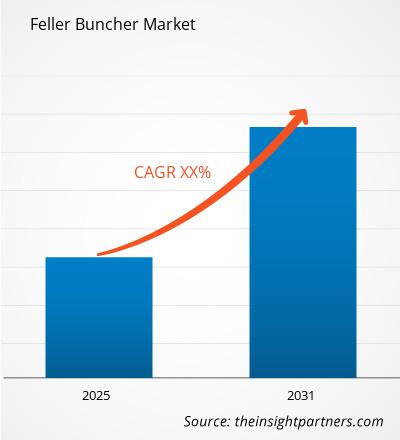
According to the latest research report by The Insight Partners, the Feller Buncher Market size is expected to reach US$ 7.81 Billion by 2034 from US$ 4.53 Billion in 2025. The market is estimated to record a CAGR of 6.22% from 2026 to 2034.
Core Market Growth Drivers
Several macro-economic and technology-driven factors are propelling the steady expansion of the global feller buncher ecosystem:
-
Escalating Global Demand for Wood and Timber Products:- Accelerated urbanization, expanding commercial and residential construction, and rising demand for paper, pulp, and biomass energy are fueling higher global timber requirements. Feller bunchers play a critical role in scaling up timber supply chains by maximizing stem yield per hour while maintaining systematic stand harvesting.
-
Shift Toward Mechanized Forestry and Safety:- Manual logging poses severe safety risks and involves high labor dependency. Forestry contractors and timber corporations are aggressively investing in heavy machinery that isolates operators in protected, ergonomic, climate-controlled cabins. Feller bunchers streamline tree-felling operations, significantly lowering per-unit production costs and mitigating workplace hazards.
-
Technological Advancements and Digitalization:- Modern feller bunchers are increasingly integrated with telematics, real-time diagnostic sensors, automated boom controls, and GPS mapping systems. These advancements allow fleet operators to optimize fuel efficiency, track machine health, plan precise harvesting routes, and reduce unnecessary environmental degradation.
-
Expansion in Land Management and Infrastructure Projects:- Beyond commercial timber harvesting, feller bunchers are witnessing heightened adoption in non-traditional applications. These include roadside vegetation management, utility right-of-way maintenance, land preparation for highway construction, and wildland firebreak creation.
Get a PDF Sample- https://www.theinsightpartners.com/sample/TIPRE00024025
Key Market Players
The global competitive landscape is defined by established heavy equipment manufacturers, specialized forestry equipment producers, and regional innovators focused on high-durability design, fuel efficiency, and hydraulic performance. Prominent companies operating in this market include:
-
Caterpillar
-
Deere and Company
-
Doosan Infracore Co. Ltd.
-
Eco Log Sweden AB
-
Grema
-
Hitachi Construction Machinery Co.
-
Ponnse
-
CNH Global
-
Volvo
-
Komatsu
These key industry stakeholders are actively engaging in strategic product launches, expanding dealer service networks, and investing heavily in Research & Development (R&D) to capture expanding market opportunities across both mature markets (North America, Europe) and high-growth forestry hubs (Asia-Pacific, Latin America).
Segment Overview
The market for feller bunchers is broadly analyzed based on machine configuration and application scope:
-
By Type:
-
Tracked Feller Bunchers: Engineered for rugged terrain, steep inclines, and soft ground conditions where stability and high traction are paramount.
-
Wheeled Feller Bunchers: Preferred for flatter terrains and selective thinning operations where higher speed, mobility, and lower ground impact are required.
-
-
By Application:
-
Logging: Comprising the majority share of demand due to continuous commercial harvesting of industrial roundwood.
-
Building and Maintaining Forestry Roads: Essential for establishing haul roads and maintaining forest access pathways.
-
Millyard and Land Management: Including site preparation, urban perimeter clearance, and biomass accumulation.
-
Get Full Copy of This Report- https://www.theinsightpartners.com/buy/TIPRE00024025
Future Outlook
The future of the feller buncher market will be shaped by the convergence of environmental sustainability mandates, electrification, and intelligent automation. Over the next decade, equipment manufacturers will face increasing pressure to lower carbon emissions and meet stringent noise and soil-compaction regulations across major timber-producing jurisdictions. As a result, the industry is poised to see a gradual shift toward hybrid powertrain options, bio-hydraulic fluids, and zero-emission electric prototypes tailored for continuous forestry operations. Concurrently, the integration of semi-autonomous cutting heads and AI-assisted stem processing will further boost productivity, reduce operator fatigue, and enable sustainable forestry management on a global scale.
About Us
The Insight Partners is a one-stop industry research provider of actionable intelligence. We help our clients in getting solutions to their research requirements through our syndicated and consulting research services. We specialize in industries such as Semiconductor and Electronics, Aerospace and Defense, Automotive and Transportation, Biotechnology, Healthcare IT, Manufacturing and Construction, Medical Devices, Technology, Media, and Telecommunications, as well as chemicals and Materials.
Contact Us
If you have any queries about this report or if you would like further information, don’t hesitate to get in touch with us:
Contact Person: Ankit Mathur
E-mail: [email protected]