
Key Highlights
-
Rapid transition toward N-type TOPCon and heterojunction solar cell architectures accelerates the adoption of high-performance encapsulation films.
-
Severe environmental conditions and extended asset lifespans force utility investors to prioritize advanced moisture and potential-induced degradation barriers.
-
Bifacial solar module deployment surges globally, necessitating specialized backsheet and encapsulation materials to optimize dual-side power generation.
-
Structural consolidation among chemical and film manufacturers reshapes upstream supply stability and cost competitiveness for global developers.
Why This Matters Now The financial viability of multi-gigawatt solar pipelines depends heavily on minimizing component degradation across a 25-to-30-year operational lifecycle. As extreme weather events increase and utility companies face tightening margins, standard encapsulation materials no longer provide sufficient insulation against early-stage asset failure. Power producers, infrastructure investors, and industrial energy users are realizing that marginal savings on upstream materials can lead to catastrophic long-term yield losses. Upgrading encapsulation strategies has shifted from a technical preference to a core risk-mitigation mandate for capital preservation in renewable energy portfolios.
Market Overview
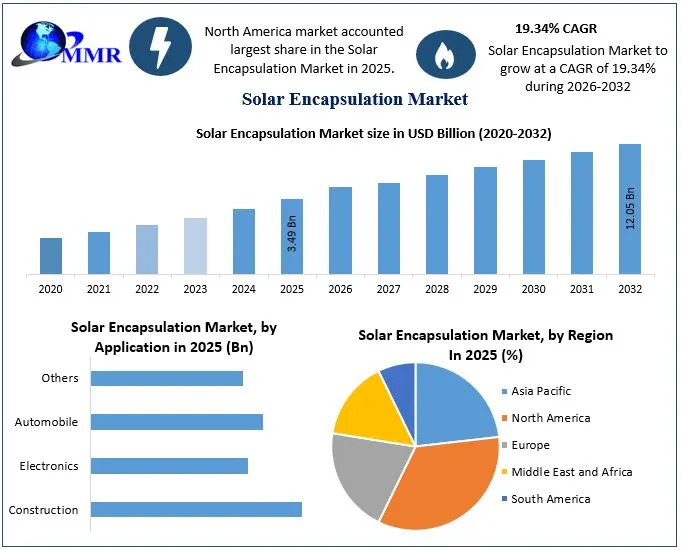
The solar encapsulation market acts as a vital anchor for global decarbonization and energy transition cycles. Photovoltaic encapsulation involves laminating solar cells between sheets of highly stable polymer films, shielding sensitive electrical components from environmental moisture, mechanical shock, and ultraviolet degradation. Exact global market valuations and localized market sizing figures are omitted from this analysis due to direct data unavailability within the core reference material. However, historical development vectors indicate that overall market volume is tracking the historic build-out of utility-scale power generation diversification and distributed energy resources.
What changed is the baseline expectation for solar asset performance. In previous investment cycles, simple protection was adequate for standard P-type Al-BSF and early PERC modules. Today, the rapid installation of hyper-sensitive, high-efficiency cells requires encapsulation films with superior volume resistivity and minimal water vapor transmission rates. This evolution aligns closely with grid modernization initiatives and transmission and distribution upgrades, as regulators demand predictable, high-voltage power injections into the grid.
Key Trends Driving Growth
The core driver of the market is the global shift toward advanced cell technologies, specifically N-type tunnel oxide passivated contact (TOPCon) and silicon heterojunction (HJT) systems. These advanced architectures are inherently more sensitive to moisture and potential-induced degradation (PID) than older module types. Consequently, utility developers are demanding encapsulation materials that mitigate these specific vulnerabilities, directly altering procurement patterns across the supply chain.
Another primary catalyst is the exponential growth of bifacial solar installations across the United States, China, India, and Germany. Bifacial modules capture sunlight from both sides, increasing power generation dynamics by up to 30 percent depending on the ground albedo. This operational shift requires the rear-side encapsulation to feature high ultraviolet transparency and exceptional structural durability, boosting specialized film consumption per megawatt installed.
Furthermore, carbon reduction initiatives and strict net-zero commitments are driving massive utility investments into desert and offshore environments. These harsh geographies expose solar modules to severe thermal cycling, high humidity, and high salt spray. The immediate business implication is a stricter screening process by independent engineers and insurance underwriters, who now mandate field-proven encapsulation solutions before approving project financing.
Segment Insights
-
Ethylene Vinyl Acetate (EVA) Films [Dominant Segment]: This material commands the largest share of historical volume due to its established manufacturing ecosystem, predictable processing behavior, and low initial capital cost. Its dominance means it remains the baseline option for standard residential and commercial rooftop applications where cost control is the primary project metric.
-
Polyolefin Elastomer (POE) Films [Fastest-Growing Segment]: This material is expanding at the highest rate because it delivers vastly superior cross-linking density, lower water vapor transmission, and excellent resistance to potential-induced degradation. The business implication is that POE has become the non-negotiable standard for advanced N-type modules and floating solar installations where environmental stress is maximized.
Regional Growth Story Asia Pacific continues to dictate the raw volume dynamics of the solar encapsulation market, driven by massive manufacturing capacity in China and expanding production hubs in India. China’s unparalleled scale in ingot, wafer, cell, and module assembly ensures that the country consumes a vast majority of global encapsulation resin outputs. Meanwhile, India’s aggressive solar deployment targets and its domestic manufacturing incentive programs are creating localized demand centers for advanced film extruders.
In the United States and Europe, the market is increasingly shaped by regulatory influences, energy security priorities, and supply chain localization mandates. The U.S. market is experiencing a significant manufacturing expansion as developers seek to comply with domestic content criteria for tax credits. In Germany and the United Kingdom, grid expansion and utility-scale solar-plus-storage integration projects are pushing developers to select premium encapsulation materials to guarantee stable baseload performance across aging grid infrastructures.
Competitive Landscape The competitive architecture of the solar encapsulation industry signals a distinct shift toward vertical integration and advanced material expertise. Leading chemical conglomerates and specialized film extruders are expanding their domestic capacities to align with shifting project pipelines. This industrial activity indicates that low-tier film suppliers will face severe margin compression as utility-scale developers consolidate their procurement with tier-one vendors capable of offering multi-year supply guarantees.
Furthermore, technology leadership is becoming the primary battleground for cost competitiveness. Companies that control the upstream supply of specialized polyolefin resins are gaining significant leverage over pure-play film laminators. This dynamic forces a structural evolution where long-term strategic partnerships between polymer scientists and module manufacturers are necessary to secure project pipelines and insulate against volatile commodity pricing trends.
Recent Developments
-
Upstream polymer suppliers expand localized resin production capacities across North America and Europe to mitigate geopolitical shipping vulnerabilities and meet domestic content requirements.
-
Material developers introduce specialized EPE (EVA-POE-EVA) co-extruded films to provide a balanced optimization of POE’s anti-PID properties and EVA’s cost-efficient processing traits.
-
Independent testing laboratories implement stricter thermal damp and mechanical endurance testing standards, forcing encapsulation manufacturers to re-formulate additive packages for better UV stability.
Strategic Implications For utility executives and asset owners, the strategic implications of encapsulation choice are tied directly to the levelized cost of energy (LCOE) and financial risk management. Utilizing suboptimal films raises the risk of premature delamination and yellowing, which reduces light transmittance and drops power output. This degradation impairs the asset’s cash flow generation, directly hurting infrastructure investors and power sector decision-makers who modeled their returns on stable asset performance.
For module manufacturers, material selection dictates access to high-value markets. As major energy developers implement stringent procurement checklists, manufacturers using uncertified or volatile encapsulation blends will find themselves excluded from major utility-scale project pipelines. Investing in high-performance POE and advanced co-extruded films is therefore a mandatory commercial strategy to preserve global market access and brand equity.
Future Outlook The trajectory of the solar encapsulation market will be defined by its ability to keep pace with rapid solar cell innovations and escalating high-voltage grid demands. As the energy transition accelerates toward higher-density cell designs and integrated storage dynamics, encapsulation films will evolve into multi-functional protective systems rather than simple physical barriers. Future market integration will favor advanced chemical formulations that actively enhance light capture while providing absolute environmental isolation under escalating climate volatility. Ultimately, the market will split along clear lines of operational resilience: future market leaders will secure dominant market shares through advanced material technology and vertically integrated supply chains, while laggards relying on commoditized, low-spec materials will be marginalized as obsolete components in a high-efficiency grid ecosystem.
Analyst Perspective
“The solar encapsulation market is no longer a simple discussion about raw material costs; it has transformed into a critical conversation about long-term asset survival and structural risk mitigation,” states Neha Nalawade, Analyst at Maximize Market Research. “As power producers aggressively transition to highly sensitive N-type architectures and expand installations into extreme climates, high-performance encapsulation films represent the primary defense line protecting billions of dollars in global energy infrastructure investments.”
About Maximize Market Research
Maximize Market Research Pvt. Ltd. (MMR) is a global market research and consulting company that provides reliable, data-focused, and practical business insights. The firm serves a wide range of industries, including healthcare, pharmaceuticals, technology, automotive, electronics, chemicals, personal care, and consumer goods. Through market forecasts, competitive analysis, strategic consulting, and industry impact assessments, MMR helps organizations understand changing market conditions, identify growth opportunities, and make informed business decisions for long-term success.
2nd Floor, Navale IT Park Phase 3
Pune Banglore Highway, Narhe
Pune, Maharashtra 411041, India
+91 9607365656
[email protected]