
Key Highlights
-
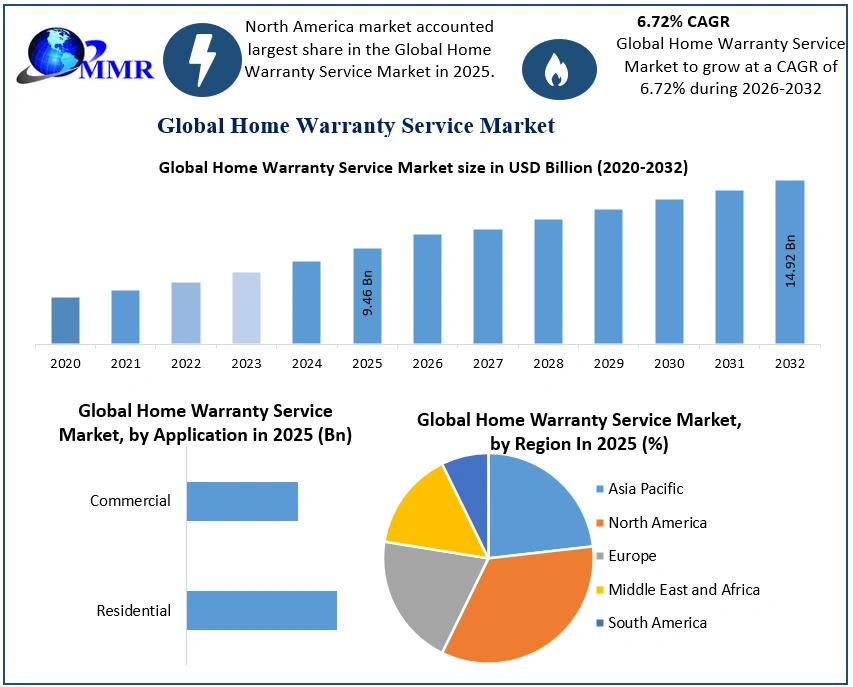
Market Capitalization: The global home warranty service market achieved a valuation of USD 9.46 billion in 2025 and is projected to reach USD 14.92 billion by 2032.
-
Expansion Velocity: The category is growing at a compound annual growth rate (CAGR) of 6.72% across the 2026 to 2032 forecast period.
-
Channel Centralization: Renewals represent the dominant sales driver, holding a market share of nearly 60% in 2025.
-
US Market Stability: The United States home warranty sector expanded at an average annual rate of 3.7% between 2020 and 2025, providing a steady baseline for North American operations.
-
Primary Sourcing Pathway: Real estate transactions remain the primary entry point for contract acquisitions, typically structured with the seller providing the policy to the buyer.
Why This Matters Now
Real estate portfolio managers, asset directors, and property technology executives face immediate cash flow disruption as unpredictable repair costs and component shortages threaten residential yields. Companies that treat property maintenance as a reactive expense rather than a structured warranty strategy face widening margin leakage as system components degrade under intense operational stress.
The traditional property management pipeline has evolved from a fragmented network of local contractors into an organized, contract-based protection framework. Escalating mechanical complexity in modern households means a single HVAC or plumbing breakdown can wipe out monthly rental profits instantly. Original equipment manufacturers (OEMs), institutional housing networks, and lifestyle property distributors that lock in high-volume, multi-year protection agreements will protect their balance sheets and maintain predictable operational expenses against rising labor and raw component costs.
Leading service networks are rapidly restructuring their delivery platforms to deploy integrated, automated claim verification tools. This structural upgrade allows warranty providers to handle high volumes of repair requests efficiently, protecting their customer retention metrics while capturing premium market share from traditional, slow-moving home insurance policies.
Market Overview
The global Home warranty service market Size operates as a highly stable, recurring-revenue segment within the real estate services, property management, and residential maintenance industries. Valued at USD 9.46 billion in 2025, the market is on track to hit USD 14.92 billion by 2032, advancing at a compound annual growth rate (CAGR) of 6.72%. This steady growth is driven by the widening gap between aging housing structures, increasing homeowner investments in property care, and the rising availability of flexible digital subscription models.
This service category remains insulated from standard retail downturns because it functions as an essential financial security tool for property owners. Unlike standard insurance that covers structural damage from disasters, home warranties cover the mechanical breakdown of everyday systems like electrical grids, plumbing lines, and kitchen appliances. This constant operational exposure ensures that both individual homeowners and corporate property managers maintain stable demand for warranty coverage to manage long-term repair budgets.
Key Trends Driving Growth
The most critical driver shifting the property protection landscape is the rapid consumer demand for highly customized and flexible service agreements. Modern homeowners are systematically turning away from generic, one-size-fits-all contracts in favor of tailored plans that cover their specific mix of premium appliances and mechanical hardware. This preference allows leading warranty providers to introduce tiered pricing strategies, maximizing contract values while offering consumers clear options for targeted system coverage.
Simultaneously, aging residential infrastructure across major urban areas is creating high volume demand for systemic repair solutions. As built properties and internal HVAC systems cross their peak operating years, the frequency of appliance breakdowns and plumbing failures naturally rises. This physical degradation forces property owners to purchase warranty contracts to avoid sudden, high-cost out-of-pocket expenses from failing machinery.
Furthermore, a widespread consumer shift toward proactive home improvement and property care is expanding the market’s addressable audience. Buyers are allocating larger portions of their annual income to preserve and optimize their physical living spaces, treating service agreements as a standard necessity of homeownership. This proactive behavior creates predictable transaction volumes for service networks, shifting the industry from emergency repair handling to ongoing, preventative maintenance management.
Segment Insights
-
Sales Channel Classifications: Divided into new home real estate transactions, direct consumer marketing lines, and high-margin contract renewals.
-
Application Sectors: Split between widespread private residential properties and localized commercial real estate spaces.
-
Core Covered Infrastructure: Comprises major home environmental systems including HVAC, plumbing networks, electrical grids, and kitchen appliances.
-
Dominant Channel Segment: The Renewals segment represents the Dominant Sales Channel, holding a commanding market share of nearly 60% in 2025, driven by high customer satisfaction, convenience, and the sustained peace of mind that comes with continuous property protection.
-
Dominant Application Segment: The Residential segment represents the Dominant Application Segment, maintaining structural volume superiority over commercial properties due to a vastly larger base of individual homeowners who require protection against unexpected household breakdowns.
Regional Growth Story
The global distribution of home warranty revenue highlights a deeply anchored market structure within the North American territory, led by the United States. The U.S. home warranty sector serves as a mature model for global markets, expanding at a stable average annual rate of 3.7% from 2020 to 2025. This steady growth is supported by deeply integrated partnerships between warranty providers and real estate brokerage networks, ensuring that service contracts are standard additions during residential home sales. The established nature of this regional pipeline provides a highly predictable revenue anchor for North American service operators.
Concurrently, international markets are beginning to adopt similar warranty frameworks as urban housing density rises across European and Asian metropolitan centers. The growth of multi-family apartment complexes requires centralized, contract-based maintenance solutions to handle complex shared piping and electrical systems. This building trend requires international operators to adapt their service networks, building relationships with localized contractor groups to ensure rapid response times across newly developed residential corridors.
Competitive Landscape
The global home warranty service market features a highly competitive landscape led by established multi-state protection groups and agile, tech-enabled service platforms. Prominent industry leaders include AFC Home Club and Cinch Home Services, Inc. The competitive friction between these top players centers on network technician quality, digital claims interface speed, and contract flexibility rather than basic premium price undercutting.
To defend their market shares, elite providers are moving away from traditional manual phone verification systems toward fully digital, automated service dispatch platforms. Top-tier operators are investing heavily in user-friendly mobile portals that connect homeowners with certified local repair technicians within minutes of a digital claim submission. This focus on clear communication and speed allows dominant firms to secure higher renewal rates, effectively locking up the most profitable consumer accounts and making it difficult for new market entrants to scale.
Recent Developments
-
Automated Claims Portals: Leading warranty brands updated their digital infrastructure, installing automated software engines to instantly match customer claims with nearby certified technicians.
-
Custom Plan Builders: Service providers launched online configuration tools, allowing customers to manually select coverage for individual appliances and exclude unneeded home systems.
-
Contractor Network Expansions: Top-tier operators expanded their verified contractor networks, offering guaranteed service minimums to protect delivery speeds during peak summer HVAC breakdown seasons.
-
Real Estate Platform Integrations: Corporate providers built direct digital links into major property transaction websites, enabling automatic warranty placement during the closing phase of home sales.
Strategic Implications
For real estate investors, warranty executives, and property network managers, the continuous growth of the home warranty market requires an immediate focus on technician network depth and claims transparency. Relying on thin or unverified third-party contractor pools creates severe service friction, leading to missed repair appointments, consumer frustration, and dropped renewals. Service managers must secure stable, exclusive service agreements with qualified local trade businesses to guarantee reliable repair quality throughout the year.
Furthermore, optimizing digital user platforms is essential for retaining space in a highly competitive subscription marketplace. Development teams must clear out complicated text layers from claims portals, replacing them with simple, real-time tracking updates that show exactly when a technician will arrive. Providers that combine simple digital interfaces with high technician availability will protect their renewal margins, while slower networks face dropping retention rates and heavy customer churn.
Future Outlook
The global home warranty service market will maintain its upward expansion as aging residential buildings, rising consumer focus on proactive maintenance, and digital subscription methods drive consistent baseline demand. As customizable protection plans, rapid digital contractor dispatching, and transparent claims tracking transition from luxury features into standard consumer requirements, the market’s top tiers will continue to scale. Service networks that secure deep local contractor relationships and optimize their digital platforms will claim dominant market positions and high customer lifetime value, whereas legacy operators dependent on confusing contract terms and slow manual claims networks will face intense margin compression, falling renewal rates, and rapid brand obsolescence.
Analyst Perspective
“The global home warranty service market has shifted from a secondary real estate transaction option to a core component of modern residential property management and consumer financial planning,” states Siddhi Dole, Lead Analyst at Maximize Market Research.
About Maximize Market Research
Maximize Market Research Pvt. Ltd. (MMR) is a global market research and consulting firm known for delivering accurate, actionable, and data-driven insights. Our expertise spans diverse industries — including medical devices, pharmaceuticals, technology, automotive, electronics, chemicals, personal care, and consumer goods. We provide services such as market-validated forecasts, competitive intelligence, strategic consulting, and industry impact analysis, helping businesses navigate market complexities and achieve sustainable growth.
2nd Floor, Navale IT Park Phase 3
Pune Banglore Highway, Narhe
Pune, Maharashtra 411041, India
+91 9607365656
[email protected]