
The modern automobile has evolved from a primarily mechanical machine into a sophisticated computer on wheels. As vehicles integrate a complex grid of sensors, infotainment networks, and advanced driver-assistance systems (ADAS), securing these interconnected electrical architectures against overcurrent and short circuits has become paramount. At the heart of this safeguarding ecosystem sits the automotive fuse.
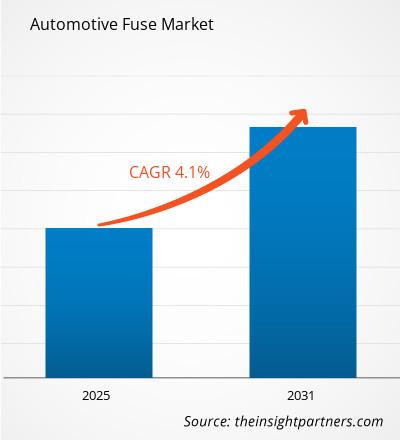
According to a comprehensive industry study, the global Automotive Fuse Market size is projected to reach US$ 2.19 billion by 2034 from US$ 1.38 billion in 2025. The market is anticipated to register a CAGR of 5.28% during the forecast period 2026–2034. This steady expansion underscores the indispensable nature of advanced circuit protection components in an era of rapid vehicular transformation.
Primary Growth Drivers
The sustained growth of the automotive fuse sector is underpinned by several macro-industrial transformations:
-
The Proliferation of Electric and Hybrid Drivetrains: Traditional internal combustion engine (ICE) vehicles rely heavily on standard 12V or 24V electrical architectures. Conversely, Battery Electric Vehicles (BEVs) and Plug-in Hybrid Electric Vehicles (PHEVs) utilize highly complex high-voltage networks ranging from 400V to 800V. Protecting the traction battery management system (BMS), power distribution units, onboard chargers, and DC-DC converters necessitates specialized high-current and high-voltage fuses.
-
Exponential Rise in Electronic Complexity: Features that were once luxury novelties—such as lane-keeping assistance, adaptive cruise control, connected infotainment setups, heated seats, and digital cockpits—have become baseline expectations across mainstream vehicle tiers. Each auxiliary circuit requires an independent mechanism to prevent localized electrical faults from cascading into critical system failures.
-
Stringent Global Vehicle Safety Regulations: Regulatory agencies worldwide are enforcing increasingly strict requirements to minimize electrical fire risks and safeguard vehicle occupants. Compliance with automotive-grade manufacturing standards (such as AEC-Q200 testing for thermal and mechanical resilience) forces automakers to source reliable, premium circuit protection.
Get a PDF Sample– https://www.theinsightpartners.com/sample/TIPAT00002116
Evolution of Product Segments
While classic blade fuses continue to dominate total unit volume due to their color-coded simplicity and ease of replacement in passenger vehicles, there is a clear market pivot toward miniaturization and enhanced performance.
To save valuable cabin space and reduce overall vehicle weight, manufacturers are increasingly adopting compact blade configurations and surface-mount fuses. Simultaneously, the industry is witnessing the development of “smart fuses” and intelligent fuse blocks. Capable of communicating directly with the vehicle’s Electronic Control Units (ECUs), these advanced variants can log real-time telemetry, provide early diagnostics on thermal stress, and alert maintenance systems before a total failure occurs.
Competitive Landscape
The automotive fuse ecosystem is highly competitive, characterized by a mix of specialized circuit protection pioneers and diverse electronic component manufacturers. Leading players are prioritizing extensive research and development to engineer robust fuses capable of handling the severe vibrations, extreme temperatures, and moisture variations common to automotive environments.
Prominent market participants steering technological advancements include:
-
ON Semiconductor
-
Schurter Holding AG
-
Littelfuse, Inc.
-
Eaton Corporation Plc
-
Mersen
-
OptiFuse
-
Pacific Engineering Corporation
-
AEM Components (USA), Inc.
Strategic partnerships between these component suppliers and major Tier-1 automotive manufacturers are accelerating, ensuring that specialized fuse designs are integrated early during the foundational design phases of next-generation vehicle platforms.
Get Full Copy of This Report- https://www.theinsightpartners.com/buy/TIPAT00002116
Future Outlook
Looking ahead, the automotive fuse market is positioned for long-term technological evolution. The accelerating push toward autonomous driving capabilities will mandate complete redundancy in vehicle power distribution networks, ensuring that backup systems are instantly isolated and preserved if a primary line fails. Additionally, as charging infrastructures migrate universally toward 800V fast-charging architectures, the demand for ultra-fast-acting ceramic and semiconductor fuses will escalate dramatically. While the volume of mechanical components in cars may dwindle with the rise of software-defined vehicles, the reliance on physical hardware to defend complex circuit networks will remain absolute, anchoring the automotive fuse as a cornerstone of modern automotive engineering.
Related Reports-
Automotive Acoustic Engineering Services Market
Automotive Axle and Propeller Market
Automotive Exhaust Sensor Market
Automotive Head Up Display Market
About Us
The Insight Partners is a one-stop industry research provider of actionable intelligence. We help our clients in getting solutions to their research requirements through our syndicated and consulting research services. We specialize in industries such as Semiconductor and Electronics, Aerospace and Defense, Automotive and Transportation, Biotechnology, Healthcare IT, Manufacturing and Construction, Medical Devices, Technology, Media, and Telecommunications, as well as chemicals and Materials.