
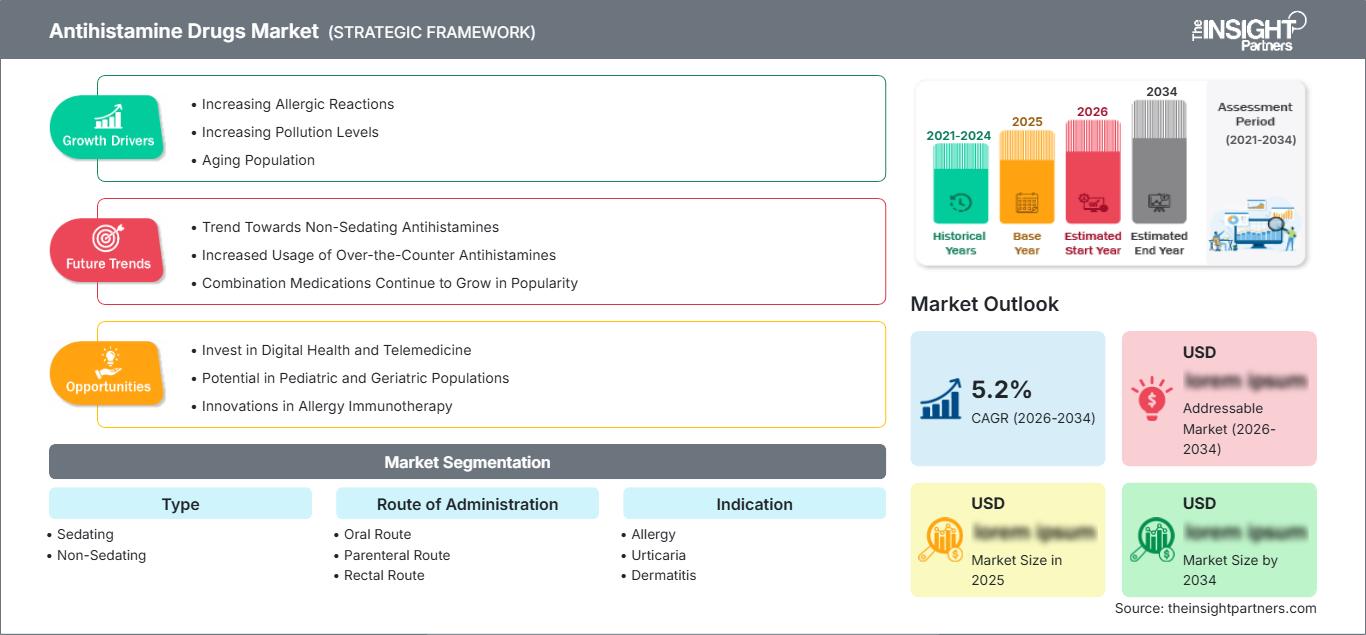

The global antihistamine drugs market is witnessing steady growth due to the increasing prevalence of allergic disorders, respiratory conditions, and immune-related diseases worldwide. Antihistamines are widely used for managing symptoms associated with allergies, including allergic rhinitis, urticaria, itching, and other histamine-mediated conditions. Rising awareness regarding allergy management, growing healthcare expenditure, and continuous advancements in pharmaceutical formulations are supporting market expansion.
The global antihistamine drugs market size is projected to reach US$ 373.15 million by 2034 from US$ 219.67 million in 2025. The market is anticipated to register a CAGR of 6.06% during the forecast period 2026-2034.
Download Sample PDF @ https://www.theinsightpartners.com/sample/TIPRE00018091
The market analysis includes key factors influencing growth, emerging opportunities, competitive developments, and industry trends shaping the future of antihistamine drug adoption across global healthcare markets.
Antihistamine Drugs Market Growth Drivers
Increasing Prevalence of Allergic Disorders Driving Market Expansion
The rising incidence of allergic conditions is one of the major factors driving the growth of the antihistamine drugs market. Environmental pollution, changing lifestyles, climate variations, and increased exposure to allergens have contributed to the growing number of individuals suffering from allergic reactions. Conditions such as allergic rhinitis, seasonal allergies, and chronic urticaria are becoming increasingly common, creating higher demand for effective antihistamine therapies.
Healthcare providers are increasingly recommending antihistamine drugs due to their ability to provide rapid relief from allergy symptoms. The growing patient population requiring allergy management solutions is expected to continue supporting market growth during the forecast period.
Growing Awareness About Allergy Treatment Options
Increasing awareness among consumers regarding allergy symptoms and available treatment options is significantly contributing to antihistamine drugs market development. Improved access to healthcare information, digital health platforms, and public awareness campaigns have encouraged individuals to seek early diagnosis and appropriate medication.
The availability of over-the-counter antihistamine products has further increased accessibility, allowing consumers to manage mild allergic conditions conveniently. This trend is expected to strengthen product demand across developed and emerging markets.
Advancements in Drug Formulations and Delivery Methods
Pharmaceutical companies are focusing on developing advanced antihistamine formulations with improved effectiveness and reduced side effects. Second-generation antihistamines are gaining popularity due to their lower sedative effects compared with traditional first-generation drugs.
Innovations such as extended-release tablets, combination therapies, and improved dosage formulations are enhancing patient convenience and treatment outcomes. These advancements are encouraging healthcare professionals and patients to adopt newer antihistamine therapies.
Rising Demand for Respiratory Allergy Management
The increasing burden of respiratory allergies is another important factor contributing to market growth. Allergic respiratory conditions require long-term symptom management, increasing the demand for effective antihistamine medications. The growing impact of air pollution and urbanization has further increased the need for allergy-related treatments.
As respiratory health awareness continues to rise, antihistamine drugs are expected to remain a key therapeutic option for managing allergy symptoms.
Antihistamine Drugs Market Trends
Increasing Preference for Non-Sedating Antihistamines
A major trend in the antihistamine drugs market is the growing preference for non-sedating medications. Patients are increasingly choosing second-generation antihistamines that provide effective symptom relief without affecting daily activities. This shift is encouraging manufacturers to focus on safer and more patient-friendly drug options.
Expansion of Online Pharmacy Platforms
The growth of online pharmacies is transforming the distribution landscape of antihistamine drugs. Consumers are increasingly purchasing medications through digital platforms due to convenience, availability, and doorstep delivery services. This trend is creating new opportunities for pharmaceutical companies to expand their market presence.
Focus on Combination Therapies
Combination therapies that address multiple allergy symptoms are gaining attention in the market. Manufacturers are developing products that combine antihistamines with other therapeutic agents to improve treatment effectiveness. These solutions are expected to create new growth opportunities for market participants.
Get Full Copy @ https://www.theinsightpartners.com/buy/TIPRE00018091
Antihistamine Drugs Market Opportunities
Growth Opportunities in Emerging Markets
Emerging economies are offering significant growth opportunities due to increasing healthcare investments, improving medical infrastructure, and rising awareness about allergy treatments. Expanding access to healthcare services in developing regions is expected to increase the adoption of antihistamine drugs.
Increasing Research and Development Activities
Pharmaceutical companies are investing in research and development activities to introduce innovative antihistamine products with enhanced safety and efficacy profiles. Continuous innovation in drug discovery and formulation development is expected to support market competitiveness.
Rising Demand for Personalized Allergy Treatment
The growing focus on personalized medicine is creating opportunities for targeted allergy treatment approaches. Understanding patient-specific conditions and developing customized treatment strategies can improve therapeutic outcomes and support future market expansion.
Antihistamine Drugs Market Key Players
The competitive landscape of the antihistamine drugs market includes several established pharmaceutical companies focusing on product development, strategic partnerships, and market expansion. Key companies mentioned in The Insight Partners report include:
- Bayer AG
- Almirall SA
- Johnson & Johnson
- AstraZeneca Plc
- Novartis AG
- Pfizer Inc.
- Sanofi SA
- Boehringer Ingelheim GmbH
- Merck & Co. Inc.
These companies are focusing on strengthening their product portfolios, advancing research activities, and expanding their presence across regional markets.
Antihistamine Drugs Market Future Outlook
The antihistamine drugs market is expected to experience consistent growth through 2034, supported by increasing allergy prevalence, technological advancements, and rising demand for effective treatment options. The transition toward safer formulations, digital healthcare solutions, and innovative drug delivery methods will continue shaping market development.
Growing investments in healthcare infrastructure and pharmaceutical innovation are likely to create new opportunities for companies operating in the antihistamine drugs industry.
Related Reports @
Allergic Rhinitis Drugs Market Trends, Size & Growth by 2034.
Antiemetic Drugs Market Size, Growth & Trends by 2034
About Us –
The Insight Partners provides comprehensive syndicated and tailored market research services in the healthcare, technology, and industrial domains. Renowned for delivering strategic intelligence and practical insights, the firm empowers businesses to remain competitive in ever-evolving global markets.
Contact Us:
Contact Person: Ankit Mathur
E-mail: [email protected]
Phone: +1-646-491-9876
Also Available in : Korean German Japanese French Chinese Italian Spanish
