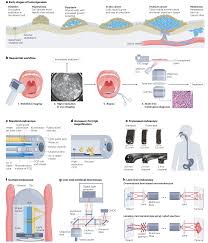
The Global Optical Imaging for Oncology Treatment Market is projected to reach a market size of USD 1,260.47 billion by the end of 2030.

The Optical Imaging for Oncology Treatment Market was valued at USD 611.89 billion and is projected to reach a market size of USD 1,260.46 billion by the end of 2030. Over the forecast period of 2025-2030, the market is projected to grow at a CAGR of 12.80%.
Request Sample
The Optical Imaging for Oncology Treatment Market has been gaining attention as the healthcare industry focuses on improving cancer detection and treatment precision. This technology, which uses light to create detailed images of tissues, allows doctors to detect cancer earlier and monitor how tumors respond to therapy. Its growing adoption is reshaping oncology practices, giving patients and doctors more confidence in treatment outcomes. Over the past few years, hospitals and research centers have increased investments in optical imaging systems, making this market an essential part of modern oncology diagnostics and therapeutics.
A major long-term driver of the market is the global rise in cancer prevalence, which has increased the need for better diagnostic and treatment tools. As the number of cancer patients continues to climb, healthcare systems are seeking technologies that can identify tumors more accurately without causing harm. Optical imaging offers a real-time, non-invasive approach, allowing specialists to see inside tissues with high resolution. This is particularly useful in differentiating between healthy and abnormal cells during surgeries or biopsies. Over time, this capability has positioned optical imaging as a critical tool in precision medicine, where personalized treatment strategies depend on accurate imaging data. The rising emphasis on early cancer detection and the integration of imaging with therapy planning are further amplifying the market’s growth trajectory.
A key opportunity emerging in the Optical Imaging for Oncology Treatment Market lies in expanding its application beyond hospitals into outpatient and diagnostic centers. The development of portable imaging systems enables usage in smaller facilities and even point-of-care settings. This opens new possibilities for cancer detection in rural and low-resource regions where access to advanced imaging has traditionally been limited. Additionally, partnerships between medical device companies and research institutions are fostering innovation in optical imaging biomarkers, potentially leading to breakthroughs in early cancer diagnosis. As funding for oncology research grows globally, these collaborations are expected to unlock new commercial and clinical opportunities.
Segmentation Analysis:
By Technology: Photoacoustic Tomography, Optical Coherence Tomography, Hyperspectral Imaging, Near-infrared Spectroscopy
In the Optical Imaging for Oncology Treatment Market, technology plays a vital role in advancing precision and improving diagnostic clarity. Among these, Optical Coherence Tomography (OCT) stands as the largest segment due to its wide clinical adoption for real-time imaging and its effectiveness in visualizing tumor microstructures without invasive procedures. Its ability to provide cross-sectional tissue images has made it a preferred choice in surgical oncology and pathology. Meanwhile, Photoacoustic Tomography (PAT) is emerging as the fastest growing during the forecast period, driven by its unique capacity to merge optical and ultrasound technologies for deeper tissue visualization.
Enquire Before Buying
By Product: Imaging Systems, Optical Imaging Software, Illumination Systems, Other
By Application: Pathological, Intraoperative
Within the Optical Imaging for Oncology Treatment Market, applications define how these technologies transform cancer care across different clinical stages. The Pathological segment is the largest in this category, primarily due to its crucial role in disease diagnosis and tissue characterization. Optical imaging allows pathologists to observe molecular and structural details of biopsied samples with remarkable accuracy, minimizing diagnostic errors. Its utility in differentiating between benign and malignant cells has led to higher adoption rates across research labs and clinical pathology departments. Conversely, the Intraoperative segment is the fastest growing during the forecast period, supported by its expanding role in guiding surgical precision. Surgeons are increasingly using intraoperative optical imaging tools to visualize tumor boundaries and ensure complete resection during procedures.
By End-Use: Research Labs, Hospitals & Clinics, Pharmaceutical and Biotechnological Companies
In the Optical Imaging for Oncology Treatment Market, the end-use landscape showcases how different institutions leverage imaging for clinical and scientific advancement. Hospitals & Clinics are the largest segment, owing to their direct involvement in patient diagnosis, treatment, and post-surgical monitoring. The growing integration of optical imaging systems in oncology departments for biopsy guidance, tumor detection, and intraoperative visualization has driven this dominance. Hospitals are also prioritizing non-invasive imaging solutions that reduce patient risk and accelerate recovery time. Meanwhile, Pharmaceutical and Biotechnological Companies are the fastest growing during the forecast period, driven by their increasing use of optical imaging in drug discovery, preclinical studies, and treatment validation.
Regional Analysis:
Geographically, the Optical Imaging for Oncology Treatment Market exhibits dynamic growth patterns shaped by healthcare infrastructure and research investments. North America remains the largest region in this segment, supported by strong healthcare funding, early adoption of advanced diagnostic technologies, and extensive cancer research initiatives. The presence of leading medical device companies and academic research centers further strengthens its market dominance. The region’s focus on early cancer detection, along with favorable reimbursement policies, continues to drive system installations across hospitals and specialized clinics. Meanwhile, the Asia-Pacific is the fastest-growing region during the forecast period, propelled by rising cancer incidence, expanding healthcare infrastructure, and increasing government support for advanced imaging technologies.
Latest Industry Developments:
- Companies are shifting capital models toward leasing, financing, and “device-as-a-service” programs to lower hospital entry barriers: Medical providers increasingly prefer operating expenditures over large capital purchases, and the optical imaging market is following that shift by adopting equipment leasing, flexible financing, and subscription-style offerings. These arrangements reduce upfront costs, speed procurement approvals, and allow hospitals to refresh hardware more frequently, which encourages broader deployment of advanced imaging in smaller clinics. Manufacturers and distributors are packaging training, maintenance, and software updates into recurring service agreements, turning one-time sales into predictable revenue streams while expanding installed bases. The trend is supported by a broader rise in medical equipment leasing and financing activity across healthcare markets.
- Firms are investing in robust clinical validation and health-economics evidence to secure reimbursement and accelerate adoption: Payer acceptance and hospital procurement increasingly hinge on clear clinical outcome data and cost-effectiveness analyses, so device makers now prioritize multi-center trials, real-world evidence collection, and health-economic dossiers. Generating prospective clinical data helps demonstrate how optical imaging shortens operative time, lowers readmission or repeat-surgery rates, and improves diagnostic yield — metrics that payers and health systems value. Companies are also partnering with academic centers to publish outcomes and build the economic case for coverage, using evidence to inform HTA and reimbursement submissions and to persuade budget committees that imaging investments deliver measurable clinical and fiscal benefits.
- Market access strategies emphasize local manufacturing, regulatory simplification, and clinician education to capture emerging markets: To expand beyond well-served regions, the optical imaging sector is localizing production, forming regional alliances, and supporting on-the-ground training programs for clinicians and biomedical engineers. Local manufacturing shortens supply chains, reduces costs, and can meet country-specific regulatory or procurement requirements; meanwhile, targeted training and KOL engagement accelerate clinician confidence and device adoption. Firms are also leveraging government innovation hubs, incubation programs, and industry partnerships to fast-track approvals and commercialization in high-growth markets, tailoring commercial models and after-sales support to local hospital budgets and workforce capabilities.