
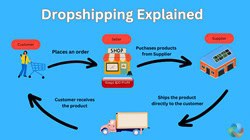

The global dropshipping market has emerged as one of the fastest-growing segments within the e-commerce ecosystem. Valued at USD 285.1 billion in 2023, the market is projected to surge to USD 1,214.32 billion by 2030, expanding at an impressive CAGR of 23% during 2024–2030. The growth of online retail platforms, the rise of digital entrepreneurship, and the need for efficient supply chain models are key factors accelerating the adoption of dropshipping worldwide.
REQUESTSAMPLE:https://virtuemarketresearch.com/report/dropshipping-market/request-sample
Industry Overview
The global dropshipping market has experienced remarkable growth in recent years due to the rapid expansion of e-commerce platforms and the increasing adoption of digital retail models. Entrepreneurs and businesses are turning to dropshipping as it allows them to operate online stores without maintaining warehouses or inventory.
This business model offers several advantages, including low startup costs, reduced inventory risk, flexible product offerings, and simplified logistics operations. With minimal barriers to entry, dropshipping has become a popular choice among startups, small businesses, and individual entrepreneurs seeking to enter the online retail space.
Furthermore, the growth of online marketplaces, digital payment solutions, and logistics networks has made it easier for sellers to connect with global suppliers and customers. As a result, the dropshipping ecosystem continues to expand, supporting innovation and new business opportunities.
Key Market Insights
-
The rapid growth of e-commerce is expected to increase the number of dropshipping businesses worldwide by over 20% in the coming years.
-
Dropshipping reduces startup costs by approximately 15% compared to traditional retail models.
-
Emerging markets such as Asia-Pacific and Latin America are witnessing a 17% rise in new dropshipping startups, driven by digital transformation and increasing internet penetration.
Market Drivers
E-Commerce Boom Accelerating Market Expansion
The exponential growth of e-commerce platforms globally is one of the most significant factors driving the dropshipping market. Consumers increasingly prefer the convenience of online shopping, which has forced retailers to adopt more efficient and flexible fulfillment solutions.
Dropshipping allows online retailers to offer extensive product catalogs without investing in warehousing or logistics infrastructure. This capability helps businesses quickly respond to consumer demand while maintaining operational efficiency.
As global e-commerce adoption continues to grow, the demand for dropshipping solutions is expected to rise significantly.
Market Restraints and Challenges
Supply Chain Disruptions
Despite its advantages, the dropshipping model is vulnerable to supply chain disruptions. Global events such as geopolitical tensions, natural disasters, and pandemics can cause delays in production, shipping, and product availability.
Since dropshipping businesses rely heavily on third-party suppliers, disruptions in supply chains can affect delivery timelines and customer satisfaction. To mitigate these risks, companies are increasingly diversifying supplier networks and implementing contingency strategies.
Intense Market Competition
The ease of entry into the dropshipping business has resulted in intense competition within the market. Numerous sellers often offer similar products, leading to price competition and reduced profit margins.
Additionally, large e-commerce marketplaces have intensified competition by providing sellers with direct access to global suppliers. As a result, small and medium-sized dropshipping businesses must focus on differentiation strategies such as niche targeting, branding, and enhanced customer experiences.
Rising Customer Expectations
Modern consumers expect fast delivery, seamless shopping experiences, and reliable customer support. However, since dropshippers depend on third-party suppliers for order fulfillment, maintaining consistent service quality can be challenging.
To meet customer expectations, businesses must invest in technology solutions, logistics optimization, and customer service improvements.
Market Opportunities
Niche Market Segmentation
One of the most promising opportunities for dropshipping businesses lies in niche market segmentation. By focusing on specialized product categories or target audiences, businesses can reduce competition and build strong brand loyalty.
Examples include eco-friendly products, customized fashion items, or specialized electronics accessories. Targeted marketing strategies enable businesses to connect more effectively with specific consumer segments.
Technological Advancements
Rapid advancements in technologies such as Artificial Intelligence (AI), automation, and data analytics are transforming the dropshipping ecosystem.
These technologies enable businesses to:
-
Predict customer demand
-
Optimize inventory management
-
Automate order processing
-
Provide personalized product recommendations
Additionally, IoT-enabled logistics systems allow real-time tracking of shipments, improving transparency and operational efficiency.
Global Dropshipping Market Segmentation
By Product Type
-
Electronics
-
Fashion Apparel
-
Beauty Products
-
Home Goods
Among these segments, fashion apparel is one of the most prominent categories in dropshipping. The fashion industry’s rapid trend cycles and relatively low production costs make it highly compatible with the dropshipping model.
By partnering with multiple suppliers and tracking fashion trends, drop shippers can continuously update their product offerings and maintain customer engagement.
By Supplier Type
-
Wholesalers
-
Manufacturers
-
Specialized Dropshipping Suppliers
Specialized dropshipping suppliers represent the most effective segment. These suppliers focus exclusively on dropshipping services and provide streamlined fulfillment solutions, curated product catalogs, and value-added services such as branding and custom packaging.
Their expertise allows dropshipping businesses to enhance operational efficiency and improve customer satisfaction.
By Technology
-
Artificial Intelligence (AI)
-
Blockchain
-
Internet of Things (IoT)
Among these technologies, Artificial Intelligence (AI) is expected to play a major role in transforming the dropshipping industry. AI tools help businesses automate marketing campaigns, forecast demand, manage inventory efficiently, and deliver personalized customer experiences.
Regional Analysis
North America
North America holds the largest share of the global dropshipping market, accounting for around 36% of the market. The region benefits from a well-developed e-commerce infrastructure, high internet penetration, and strong consumer purchasing power.
Major online retail platforms such as Amazon, eBay, and Shopify have created an ideal environment for dropshipping businesses to thrive.
Europe
Europe represents another important market due to its mature online retail ecosystem and increasing adoption of digital commerce platforms. Several startups and technology providers are emerging in the region, supporting dropshipping innovation.
COVID-19 Impact on the Dropshipping Market
The COVID-19 pandemic significantly accelerated the adoption of dropshipping and e-commerce globally. Lockdowns and social distancing measures forced many traditional retailers to shift to online sales channels.
As consumers increasingly relied on online shopping during the pandemic, dropshipping emerged as a viable solution for businesses seeking to meet rising demand without investing heavily in inventory or logistics infrastructure.
However, the pandemic also exposed vulnerabilities in global supply chains, resulting in shipping delays and inventory shortages. Despite these challenges, the crisis encouraged innovation and digital transformation within the dropshipping industry.
BUYNOW:https://virtuemarketresearch.com/report/dropshipping-market/enquire
Latest Market Trends
Several key trends are shaping the future of the dropshipping market:
-
Sustainable sourcing and eco-friendly packaging
-
Integration of AI and automation tools
-
Use of blockchain for supply chain transparency
-
Growth of niche markets and micro-branding strategies
-
Enhanced customer experiences through augmented reality and personalization
These trends are expected to reshape the competitive landscape and drive further innovation within the dropshipping industry.
Key Companies in the Dropshipping Market
Major companies operating in the global dropshipping market include:
-
Oberlo
-
SaleHoo
-
Spocket
-
Dropified
-
Wholesale2b
-
Modalyst
-
Doba
-
AliDropship
-
Inventory Source
-
Printful
-
Dropship Direct
-
CJ Dropshipping
These companies are actively investing in automation tools, logistics infrastructure, and supplier networks to strengthen their market presence and support growing demand for dropshipping solutions.
CUSTOMISATION: https://virtuemarketresearch.com/report/dropshipping-market/customization
✅ Conclusion
The global dropshipping market is experiencing rapid expansion driven by the growth of e-commerce, technological advancements, and the increasing popularity of online entrepreneurship. With low startup costs and scalable business models, dropshipping continues to attract startups, small businesses, and digital retailers worldwide.


