

Furring Strips Market Outlook (2025–2035)
Furring Strips Market is maintaining a steady growth trajectory within the global construction and renovation sectors as of March 12, 2026. Valued at USD 1,678.9 million in 2024, the industry is projected to grow from USD 1,741.0 million in 2025 to USD 2,500.0 million by 2035. This represents a consistent compound annual growth rate (CAGR) of 3.7% during the forecast period.
Furring strips are essential structural components used to level surfaces and create an air gap for insulation or moisture management in wall and ceiling assemblies. In 2026, the market is being catalyzed by the “Retrofit and Energy Efficiency” trend, where Building Renovation projects are utilizing Insulated Furring Strips to enhance the thermal performance of aging residential and commercial infrastructures.
GLOBAL SUPPLY CHAIN & MARKET DISRUPTION ALERT
Escalating geopolitical tensions in the Middle East, particularly around the Strait of Hormuz and the Red Sea, are creating significant disruptions across global energy, chemicals, and logistics markets. Critical shipping corridors are under pressure, with major oil, LNG, petrochemical, and raw material flows at risk, triggering supply chain delays, freight cost surges, insurance withdrawals, and heightened price volatility. These disruptions are increasing operational risks and cost uncertainties for industries dependent on global trade routes and energy-linked feedstocks.
Access our real-time disruption analysis covering supply chain risks, price outlook scenarios, logistics impacts, and alternative sourcing strategies.
Get Sample Report PDF:https://www.wiseguyreports.com/sample-request?id=615178
Key Market Trends & Insights (2026 Update)
-
Steady Valuation Growth: Data indicates the market scaling toward USD 2.5 billion by 2035. The 3.7% CAGR is firmly supported by the Residential and Commercial construction sectors, which prioritize moisture-resilient interior systems.
-
The Rise of Metal and Composite Strips: In early 2026, demand for Metal (galvanized steel) and Composite furring strips has increased. These materials are being prioritized over traditional wood in high-moisture environments due to their resistance to rot, mold, and fire.
-
Insulated Furring for “Passive House” Standards: 2026 industry insights highlight a surge in Insulated Furring Strips. These advanced strips incorporate a thermal break, helping contractors meet the 2026 “Passive House” and “Net-Zero” building codes by eliminating thermal bridging in wall assemblies.
-
Timber & Logistics Volatility: As of March 12, 2026, the cost of softwoods and specialized metal alloys has risen by 10% to 13% due to the logistical disruptions and supply chain delays noted in our Global Disruption Alert.
-
Expansion in Interior Design: In 2026, the Interior Design segment is adopting specialized furring systems for high-end acoustic panels and decorative cladding, requiring strips with precise dimensional stability and ease of installation.
Market Segmentation
-
By Material Type: Wood, Metal, Plastic, Composite.
-
By Application: Construction (New Build), Furniture, Building Renovation, Interior Design.
-
By Product Type: Standard Furring Strips, Advanced Furring Strips, Insulated Furring Strips.
-
By End Use: Residential, Commercial, Industrial.
-
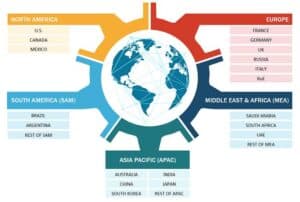
By Region: North America, Europe, South America, Asia Pacific, Middle East and Africa.
Strategic Industry Analysis (2026 Context)
In 2026, the furring strips sector is defined by “Moisture Management Engineering.” Manufacturers are shifting toward “Vented Furring” designs that allow for improved airflow behind exterior siding, preventing the “sick building syndrome” associated with trapped moisture. As mentioned in our Global Disruption Alert, the volatility of global shipping has favored Regional Lumber and Metal Fabrication. In March 2026, we are seeing a shift where construction firms are qualifying localized suppliers to avoid the 20-day maritime delays currently affecting intercontinental shipping.
Technically, 2026 is seeing the rollout of “Recycled Plastic Furring.” These strips offer 100% moisture resistance and are becoming a preferred choice for basement finishing and exterior rainscreen applications, aligning with the 2030 circular economy goals of global developers.
Related Reports
People Also Ask: FAQ
What is the furring strips market size in 2026?
The market is currently valued at approximately USD 1,805 million in 2026, growing from its USD 1,678.9 million base in 2024.
What is the expected CAGR for the industry?
The industry is exhibiting a steady CAGR of 3.7% during the forecast period of 2025–2035.
How do Red Sea disruptions affect building material prices in 2026?
As of March 2026, increased freight and insurance costs for bulk timber and metal imports have led to a 10% to 12% price hike for furring strips in markets relying on global shipping routes.
Why are metal furring strips gaining popularity in 2026?
In 2026, metal furring is preferred in commercial and industrial settings because it is non-combustible, perfectly straight, and offers superior longevity compared to wood in areas prone to dampness.
What are the benefits of insulated furring strips in 2026?
Insulated furring strips provide a continuous layer of insulation and a built-in thermal break, which is essential for meeting the 2026 energy codes that require a reduction in heat loss through wall studs.
Get Sample Report PDF:https://www.wiseguyreports.com/sample-request?id=615178
