Global North America Gum Arabic Market is projected to reach the value of USD 446.21 Million by 2030.

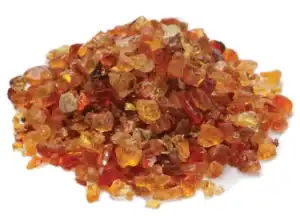
Derived from the hardened sap of two Acacia species, Senegalia senegal and Vachellia seyal, gum Arabic is a naturally occurring gum. It finds application across multiple industries, including food and beverages, pharmaceuticals, and several others. The North American region holds a significant share in the gum Arabic market. Historically, the market has experienced notable growth, particularly within the food and beverage sector, driven by its role in enhancing product quality and performance. Currently, the market continues to advance, supported by ongoing research and development, innovative formulations, and expanding application areas. Looking ahead, the market is expected to strengthen further, fueled by increasing emphasis on sustainability, evolving consumer demands, and growth in international trade.
Request Sample
The outbreak of the virus had a significant negative impact on the gum Arabic market. Lockdowns, social distancing measures, and restrictions on movement became widespread, leading to disruptions in supply chains, transportation, and overall logistics. Import-export activities were particularly affected, resulting in an approximate 40% decline in both demand and supply. These factors collectively contributed to an economic downturn, with investments in the market remaining minimal as resources were redirected toward the development of vaccines, COVID-19 testing kits, and other healthcare solutions. Additionally, labor shortages due to uncertainty hampered end-to-end operational planning. Many companies and manufacturing facilities temporarily ceased operations, while closures of restaurants, hotels, and other dining establishments further reduced the demand for gum Arabic. Some minor side effects associated with its use also conflicted with growing health and wellness trends. Nevertheless, following the easing of lockdowns and relaxation of regulations, the market has gradually begun to recover.
Recent inflationary pressures have also affected multiple markets, including gum Arabic. The high costs associated with raw material procurement, import-export processes, manufacturing, and production can discourage companies from investing in this sector. Despite its health benefits, reports of nausea, bloating, allergic reactions, and mild oral discomfort have posed challenges. Moreover, as gum Arabic is predominantly produced in the Middle East and Africa, logistical and regulatory differences across regions can impede international supply. Ensuring consistent product quality across all batches remains another challenge, as lapses can affect market reputation and growth potential.
Gum Arabic is primarily utilized in the food industry, serving as a thickening agent in gums. It also functions as an emulsifier, stabilizer, flavor enhancer, texturizer, and foaming agent in a variety of food and beverage products. These functional properties support its use in confectionery, candies, jellies, chocolates, soft drinks, sodas, and beers. In the pharmaceutical sector, gum Arabic is incorporated into tablets and lozenges for its health benefits. Additionally, it is employed as an adhesive, additive, or binder in ceramics, paper products, paints, and other manufacturing applications, making it a versatile ingredient that contributes to revenue generation.
From a health perspective, gum Arabic acts as a dietary fiber that supports healthy weight management. Clinical research has demonstrated that acacia promotes the growth of beneficial gut bacteria, acting as a prebiotic to enhance populations of Lactobacillus and Bifidobacterium. It is also associated with reduced cholesterol levels and a lowered glycemic index in beverages, helping to maintain healthy insulin levels. Moreover, gum Arabic is FODMAP-friendly, reducing the risk of gastrointestinal discomfort, and it does not contribute to plaque or dental cavities, being a non-fermentable carbohydrate. Some studies have also suggested that it may help mitigate risks associated with high protein intake and kidney-related issues.
Enquire Before Buying
Market Segmentation:
By Source: Acadia Senegal and Acadia Seyal
Acacia senegal represents the largest segment within the gum Arabic market, accounting for an estimated 65% share. This dominance is attributed to its wide geographical distribution, resilience to harsh conditions such as drought, suitability for cultivation in arid regions, and its excellent gelling properties, strength, and versatility. Additionally, it delivers higher yields and superior product quality.
Acacia seyal, on the other hand, is the fastest-growing segment, capturing approximately 35% of the market. It is recognized for its high gum content and quality, as well as its ability to tolerate higher pH levels, resist salinity, and withstand flooding, making it a highly suitable option for cultivation. Over the forecast period, Acacia seyal is expected to exhibit a significant growth rate, further strengthening its market presence.
By Function: Coating Agent, Fat Replacer, Thickener, Gelling Agent, Texturing Agent, Stabilizer, and Others
Thickeners represent the largest segment in the gum Arabic market. They are widely utilized in desserts and beverages to enhance texture, flavor, and stability, while also contributing to calorie reduction. In addition, they are considered a cost-effective ingredient. Fat replacers, in contrast, are among the fastest-growing segments, driven by rising prevalence of chronic diseases, increasing health and wellness awareness, growing consumer demand, and the preference for reduced-fat products.
By Application: Confectionary, Beverage Products, Bakery Products, Dairy Products, Sauces & Dressings, and Others
Beverage products constitute the largest segment in the gum Arabic market, accounting for approximately 32% of the share. Gum Arabic is widely employed in soft drinks as a stabilizer, emulsifier, flavor enhancer, and texturizing agent, often outperforming alternatives such as starch and gelatin. With the expansion of food chains and evolving consumer lifestyles, this segment is expected to experience significant growth during the forecast period.
Dairy products, meanwhile, represent the fastest-growing segment. Gum Arabic is utilized in these products to reduce fat, prevent crystal formation, and act as an emulsifier to maintain a smooth and consistent texture. The rising consumption of dairy items, along with the increasing popularity of plant-based and vegan alternatives, is driving strong demand in this segment.
Regional Analysis:
The United States accounts for the largest share of the North American gum Arabic market, representing approximately 52% of the region’s total. This leadership is driven by factors such as a large population, high demand, widespread application across end-user industries including food, beverages, and pharmaceuticals, a substantial number of dining establishments, the presence of key companies, technological advancements, and dominance in import trade. Significant revenue is generated from states such as California, Illinois, Texas, and New York.
In contrast, Canada is the fastest-growing market in the region, supported by rising demand, increased research and development activities, growing investments, the emergence of key industry players, expanding applications, and government initiatives aimed at fostering market growth.
Latest Industry Developments:
Merger & Acquisition: In addition to these initiatives, they are focusing on technological advancements and the development of innovative products to strengthen their competitive position. This proactive approach not only supports business growth but also aligns with evolving consumer demands for high-quality, safe, and transparently labeled products. In addition to maintaining competitive pricing, businesses are heavily investing in the enhancement of existing technologies and the development of innovative solutions, contributing to overall market growth. Consumer trends increasingly favor products with clear and transparent labeling, providing full disclosure of all ingredients. This transparency not only helps mitigate potential allergen or safety risks but also strengthens consumer trust. Such initiatives are expected to further drive market expansion in the coming years.