Nitrogen-Based Flame-Retardant Market is projected to reach the value of USD 697.93 Million by 2030

According to the report published by Virtue Market Research in The Global Nitrogen-Based Flame-Retardant Market was valued at USD 461.11 million and is projected to reach a market size of USD 697.93 million by the end of 2030. Over the forecast period of 2025-2030, the market is projected to grow at a CAGR of 6.1%.
Request Sample Copy Of This Report @ https://virtuemarketresearch.com/report/nitrogen-based-flame-retardant-market/request-sample
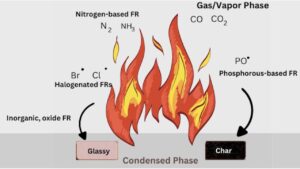
Nitrogen-based flame retardants represent a key segment within the broader flame-retardant industry, gaining popularity as environmentally friendly alternatives to halogenated compounds. These chemical formulations work by releasing nitrogen when exposed to high temperatures, which dilutes flammable gases and restricts oxygen supply to fire zones. The unique appeal lies in their lower toxicity and reduces environmental impact compared to traditional options.
Fire safety regulations across countries continue to evolve with increasingly stringent requirements, pushing industries toward effective flame-retardant solutions. Government bodies worldwide have established comprehensive frameworks specifying minimum fire resistance standards for construction materials, furniture, electronics, and transportation equipment. These regulatory frameworks serve as powerful long-term market drivers for nitrogen-based flame retardants.
The European Union’s REACH (Registration, Evaluation, Authorization and Restriction of Chemicals) regulation has particularly affected market dynamics by restricting certain halogenated flame retardants due to environmental concerns. Similarly, the International Electrotechnical Commission (IEC) and various building codes worldwide mandate specific flame retardancy levels that products must achieve before market entry. These regulations create steady demand regardless of economic cycles.
The COVID-19 pandemic disrupted the nitrogen-based flame-retardant market through multiple mechanisms. Initially, lockdowns caused temporary closures of manufacturing facilities across chemical supply chains. Raw material shortages emerged as transportation networks faced restrictions, creating production bottlenecks throughout 2020 and early 2021.
Construction activities, a major consumer of flame retardants, slowed significantly during peak pandemic periods. The housing market experienced delayed projects and postponed renovations due to economic uncertainty. Similarly, automotive production—another key application area—faced dramatic slowdowns as consumer demand dropped during lockdown periods.
The growing emphasis on green building certifications represents a powerful short-term driver for nitrogen-based flame retardants. Programs like LEED (Leadership in Energy and Environmental Design) and BREEAM (Building Research Establishment Environmental Assessment Method) award points for using sustainable materials with minimal environmental impact. Nitrogen-based flame retardants align perfectly with these criteria, offering fire protection without the ecological concerns associated with halogenated alternatives.
An emerging opportunity exists in combining nitrogen-based flame retardants with smart building technologies. As Internet of Things (IoT) systems become standard in modern buildings, manufacturers have begun developing flame retardant formulations specifically designed for components like sensors, wiring systems, and control panels. These specialized formulations must maintain fire protection while ensuring electrical properties remain unaffected.
The market shows a clear trend toward highly customized nitrogen-based flame-retardant formulations developed for specific end-use applications. Rather than offering generic products, manufacturers increasingly collaborate with customers to create tailored solutions that address unique performance requirements, processing conditions, and compatibility concerns.
Market Segmentation:
By Type: Melamine, Dicyandiamide, Guanidine Salts, Melamine Cyanurate, Others
Dominant segment – Melamine dominates the nitrogen-based flame-retardant market with approximately 45% market share. This compound achieves effectiveness through its high nitrogen content that releases nitrogen gas during fires. Industries prefer melamine because it works well in plastics, foams, and coatings without significant color changes to end products. Manufacturers appreciate its stability during processing at high temperatures, allowing integration into materials that undergo extensive heating during production.
Fastest growing segment – Dicyandiamide represents the fastest-growing segment, expanding at 10.2% annually. This compound gained popularity for its excellent compatibility with epoxy resins used in circuit boards and electronic components. Recent technological breakthroughs have reduced production costs, making dicyandiamide more competitive against traditional options. Its minimal impact on material properties while providing necessary fire resistance drives adoption across expanding application areas.
By Application: Building and Construction, Electronics and Appliances, Transportation, Wire & Cable, Textile, Others
Dominant segment – Building and Construction Building and construction applications lead the market, accounting for 38% of total consumption. Nitrogen-based flame retardants protect insulation materials, wall panels, roofing membranes, and structural components. The sector’s dominance stems from stringent building codes requiring certified fire-resistant materials throughout construction projects. Large volume requirements per project create substantial demand, while renovation activities in older buildings continually refresh market needs.
Fastest growing segment – Electronics and Appliances Electronics and appliances represent the fastest-growing application segment, expanding at 11.3% annually. Growth stems from miniaturization trends that place components closer together, increasing fire risks and necessitating effective retardants. Consumer electronics manufacturers increasingly select nitrogen-based formulations to meet safety standards while addressing consumer concerns about chemical exposure. The segment benefits from rapid production cycles that continuously introduce new devices requiring flame protection solutions.
Read More @ https://virtuemarketresearch.com/report/nitrogen-based-flame-retardant-market
Regional Analysis:
Dominant Region – North America North America holds market leadership with 35% share, driven by strict regulatory frameworks and widespread adoption across diverse industries. The region’s mature construction sector consistently incorporates flame retardant materials, while electronics manufacturing maintains steady demand. Market penetration reaches across furniture, automotive, and textiles industries. Regional manufacturers have established strong distribution networks that efficiently serve various industrial customers throughout the continent.
Fastest growing Region – Asia Pacific Asia Pacific demonstrates the fastest growth rate at 12.4% annually, fueled by expanding manufacturing activities and strengthening safety regulations. China and India lead regional consumption as their construction sectors boom alongside growing middle-class populations demanding safer products. Local production capacity has increased substantially since 2022, reducing dependence on imports and lowering costs. The region’s electronic manufacturing hubs drive particular demand for specialized nitrogen-based formulations optimized for circuit boards and components.
Customize This Study As Per Your Requirements @ https://virtuemarketresearch.com/report/nitrogen-based-flame-retardant-market/request-sample
Latest Industry Developments:
- Manufacturers are increasingly investing in green chemistry approaches to develop bio-based nitrogen flame retardants, utilizing agricultural waste streams and renewable feedstocks to create more sustainable product portfolios while maintaining performance characteristics required by industrial customers.
- Companies across the value chain are establishing strategic partnerships with downstream manufacturers, providing customized flame-retardant solutions and technical expertise rather than commodity chemicals, allowing for differentiation through service offerings and application knowledge.
- Research organizations and market leaders are accelerating innovation in synergistic formulations that combine nitrogen-based compounds with phosphorus and mineral additives to achieve improved performance at lower loading levels, reducing material costs while enhancing physical properties of treated substrates.