
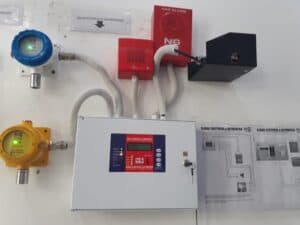

The Global Leak Detection System Market was valued at USD 14.13 billion in 2023 and is projected to reach USD 19.1 billion by 2030, growing at a CAGR of 4.4% during the forecast period (2024–2030).
REQUEST SAMPLE: https://virtuemarketresearch.com/report/leak-detection-system-market/request-sample
Leak detection systems (LDS) are critical technologies used to identify, locate, and quantify leaks in pipelines, storage tanks, refineries, offshore platforms, and processing facilities. These systems help prevent catastrophic failures, environmental damage, financial losses, and reputational risks—particularly in oil & gas and utility sectors.
Industry Overview
With the recovery of global oil prices, pipeline operators and E&P companies are increasing investments in automation and advanced monitoring technologies. Leak Detection and Repair (LDAR) systems are increasingly integrated with:
-
Artificial Intelligence (AI)
-
Machine Learning (ML)
-
Satellite-based monitoring
-
Cloud-based analytics
These technologies allow operators to detect ground-level emissions, analyze trends, and make data-driven decisions.
Industries driving adoption include:
-
Oil & Gas (upstream, midstream, downstream)
-
Petrochemical plants
-
Natural gas utilities
-
Power generation
-
Offshore platforms and onshore facilities
Growing venture capital investments in AI-based LDAR solutions are also opening new growth opportunities.
COVID-19 Impact
The COVID-19 pandemic negatively affected the market in 2020 due to:
-
Lockdowns in major economies such as United States, Italy, and United Kingdom
-
Disruptions in manufacturing and supply chains
-
Decline in aviation fuel demand
-
Reduced industrial activities
However, recovery in oil & gas exploration and increased regulatory focus on environmental protection have supported market stabilization.
Market Drivers
1. Rising Pipeline & Storage Tank Leak Incidents
Leak incidents in upstream, midstream, and downstream operations pose:
-
Safety hazards
-
Environmental damage
-
Regulatory penalties
-
Loss of brand reputation
Growing oil & gas exploration activities are increasing the need for reliable leak detection technologies.
For example, Neptune Energy announced gas production from the Adorf Carboniferous development in northwest Germany in November 2020, reflecting expanding exploration activities.
2. Expanding Global Oil & Gas Infrastructure
New discoveries and rising global energy demand are driving:
-
Expansion of natural gas processing plants
-
Pipeline infrastructure development
-
Offshore drilling operations
This expansion increases demand for advanced LDS technologies to ensure operational integrity.
Market Restraints
1. Retrofitting Challenges
Fiber-optic systems such as:
-
Distributed Temperature Sensing (DTS)
-
Distributed Acoustic Sensing (DAS)
are expensive and difficult to retrofit into existing long-distance pipelines (>50 km). This increases deployment costs.
2. Technological Limitations in Offshore Systems
Current subsea leak detection systems:
-
May not perform efficiently in Arctic conditions
-
Sometimes fail to classify leak sizes accurately
-
Require continuous operation and cost-effective installation
These limitations may restrict growth in offshore environments.
Market Segmentation
By Component
1. Equipment
2. Services
-
The Services segment dominated in 2021 with over 65% revenue share due to rising demand for LDAR compliance services in refineries and chemical plants.
-
The Equipment segment is projected to grow at the fastest CAGR, driven by advanced multi-gas sensors, cloud integration, and greenhouse gas monitoring solutions.
By Technology
-
Volatile Organic Compounds (VOC) Analyzer
-
Optical Gas Imaging (OGI)
-
Laser Absorption Spectroscopy
-
Ambient/Mobile Leak Monitoring
-
Acoustic Leak Detection
-
Audio-Visual-Olfactory Inspection
The VOC Analyzer segment led the market in 2021 with over 30% revenue share. VOC analyzers detect gases such as propane, N-pentane, N-butane, and N-octane.
The Optical Gas Imaging (OGI) segment is expected to grow at the fastest rate. OGI uses infrared thermal cameras to detect fugitive emissions in:
-
Petrochemical plants
-
Natural gas facilities
-
Power generation plants
Regional Analysis
North America (Market Leader)
North America accounted for approximately 53% market share in 2021, driven by:
-
Strict U.S. pipeline safety regulations
-
Government support for oil & gas
-
Expanding natural gas production
The United States mandates leak detection systems for pipelines carrying hazardous liquids, significantly driving demand.
Asia-Pacific (Fastest Growing Region)
The Asia-Pacific region is projected to grow significantly due to:
-
Rising oil and gas demand
-
Expansion of pipeline infrastructure
-
Growing natural gas production in China
Utility companies in the region are increasingly adopting LDAR systems to meet environmental standards.
Europe
Europe maintains steady growth due to:
-
Strict environmental regulations
-
Expanding renewable and natural gas infrastructure
-
Increasing focus on emission reduction targets
BUYNOW:https://virtuemarketresearch.com/report/leak-detection-system-market/enquire
Key Market Players
Major companies operating in the market include:
-
Honeywell International Inc.
-
Siemens AG
-
PSI AG
-
FLIR Systems
-
Schneider Electric
-
Krohne Messtechnik GmbH
-
Synodon Inc.
-
Clampon AS
-
Atmos International
-
TTK Leak Detection
Recent Developments
-
June 2020: Atmos International launched a regulatory compliance solution to support API 1130 compliance.
-
October 2020: ABB introduced the MicroGuard gas leak detection system integrated with MobileGuard technology.
-
December 2020: Senet partnered with CNIguard and Semtech Corporation to provide LoRaWAN-based natural gas leak detection systems across the United States.
CUSTOMISATION: https://virtuemarketresearch.com/report/leak-detection-system-market/customization
Conclusion
The Leak Detection System Market is witnessing stable growth driven by:
-
Rising pipeline infrastructure
-
Increasing oil & gas exploration activities
-
Strict environmental and safety regulations
-
Adoption of AI-powered monitoring systems
Despite retrofitting challenges and offshore technological limitations, advancements in VOC analyzers, optical gas imaging, and cloud-integrated solutions are expected to sustain market expansion through 2030.


