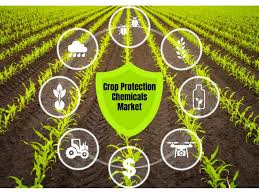

The Global Crop Protection Chemicals Market was valued at USD 79.44 billion in 2025 and is projected to reach a market size of USD 102.31 billion by the end of 2030, expanding at a CAGR of 5.2% during the forecast period from 2026 to 2030.
Request Sample
The market continues to progress steadily as agricultural producers worldwide focus on improving crop yields, protecting food security, and managing increasing pressure from pests, weeds, and plant diseases. Crop protection chemicals remain essential inputs across both large-scale commercial farms and smallholder agricultural operations, supporting consistent productivity under varying environmental and climatic conditions.
A key long-term driver of the market is the rising global demand for food combined with limited availability of arable land. As population growth continues and farming land faces pressure from urbanization and soil degradation, farmers are required to produce more output from the same or smaller areas. Crop protection chemicals help reduce pre- and post-harvest losses, ensuring stable yields and predictable crop quality. During the COVID-19 pandemic, this driver became more pronounced as labor shortages and mobility restrictions reduced access to manual pest control methods. Chemical-based solutions provided reliability during these disruptions, allowing agricultural activities to continue with minimal yield loss. While temporary supply chain challenges emerged, the essential nature of agriculture supported a rapid recovery in demand.
In the short to medium term, changing weather patterns have emerged as a strong growth driver. Irregular rainfall, extended droughts, and warmer temperatures have increased the frequency and intensity of pest infestations. Farmers are responding by adopting preventive crop protection strategies rather than reactive approaches. This has increased demand for fast-acting and broad-spectrum chemical products, particularly during planting and early growth stages.
A major opportunity within the Crop Protection Chemicals Market lies in the expansion of modern farming practices across developing economies. Governments and private organizations are investing in farmer education programs that promote the correct and efficient use of crop protection inputs. Improved access to credit and agricultural advisory services is enabling farmers to shift toward structured crop protection programs, creating sustained demand for advanced and reliable chemical solutions.
One notable trend shaping the market is the growing focus on precision and controlled application. Farmers are increasingly adopting products that require lower application volumes while maintaining effectiveness. Enhanced labeling, measured-dose packaging, and compatibility with precision spraying equipment are gaining popularity. This trend reflects a shift toward optimized usage, supporting both environmental responsibility and long-term soil productivity.
Enquire Before Buying
Market Segmentation
By Type: Herbicides, Insecticides, Fungicides, Bio-pesticides, Nematicides
Herbicides represent the largest segment within the Crop Protection Chemicals Market, driven by the widespread need to control weeds that compete with crops for nutrients, water, and sunlight. Their extensive use across cereals, grains, and commercial crops supports consistent demand. Bio-pesticides are the fastest-growing segment during the forecast period, supported by rising awareness of eco-friendly solutions and increasing adoption of integrated pest management practices.
By Distribution Channel: Wholesalers & Distributors, Retailers, Online/E-commerce
Wholesalers and distributors account for the largest share of the distribution channel segment due to their strong networks, bulk supply capabilities, and direct relationships with farming communities. Online and e-commerce channels are the fastest-growing segment as digital platforms improve product accessibility, pricing transparency, and doorstep delivery, particularly in semi-urban and rural regions.
By Crop Type: Cereals & Grains, Fruits & Vegetables, Oilseeds & Pulses, Commercial Crops
Cereals and grains form the largest crop type segment, as staple food production requires consistent protection against weeds, insects, and fungal infections. Fruits and vegetables are the fastest-growing segment owing to their high value, sensitivity to pest damage, and increasing global demand for quality produce with minimal losses.
By Source: Synthetic, Natural/Biological
Synthetic crop protection chemicals dominate the market due to their proven effectiveness, longer shelf life, and widespread availability. Natural and biological sources are the fastest-growing segment during the forecast period, driven by regulatory support, sustainability initiatives, and growing consumer preference for reduced chemical residue in food products.
Regional Analysis
Asia-Pacific represents the largest regional market for crop protection chemicals, supported by extensive agricultural activity, large farming populations, and high food demand across countries such as China and India. North America is the fastest-growing region during the forecast period, driven by advanced farming practices, high adoption of precision agriculture technologies, and increased focus on yield optimization.
Europe maintains steady growth supported by regulated chemical usage and growing adoption of integrated pest management. South America benefits from expanding commercial farming, particularly in oilseeds and grains. The Middle East & Africa region shows gradual growth as agricultural modernization and food security initiatives gain momentum.
Latest Industry Developments
- Increased Investment in Precision Agriculture Compatibility
Manufacturers are developing crop protection chemicals compatible with precision spraying systems, enabling targeted application and reduced wastage. - Expansion of Biological Product Portfolios
Leading players are expanding bio-based product lines to address sustainability goals and evolving regulatory frameworks. - Enhanced Farmer Education and Training Programs
Companies and governments are collaborating to improve awareness around proper dosage, timing, and application methods, supporting safe and effective chemical use.