
Corrosion Monitoring Market to Grow at 5.75% CAGR Through 2035, Driven by Rising Asset Integrity Demand

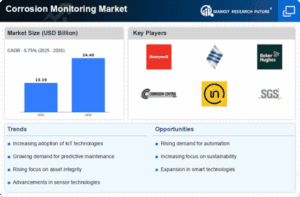
The Corrosion Monitoring Market has emerged as a critical component of asset integrity management across multiple industries, including oil & gas, power generation, chemical processing, marine, and infrastructure. Corrosion Monitoring Market Size was estimated at USD 13.19 Billion in 2024. The industry is expected to grow from USD 13.95 Billion in 2025 to USD 24.4 Billion by 2035, registering a compound annual growth rate (CAGR) of 5.75% during the forecast period (2025–2035).
Corrosion causes significant economic losses worldwide, leading to equipment failure, production downtime, safety risks, and environmental damage. As industries increasingly focus on predictive maintenance, operational safety, and regulatory compliance, corrosion monitoring solutions are gaining widespread adoption. Technological advancements such as smart sensors, IoT-enabled monitoring systems, and real-time data analytics are further accelerating market growth.
Market Drivers
- Rising Demand for Asset Integrity Management
Industries operating in harsh environments—such as offshore oil & gas, petrochemical plants, and power stations—face continuous exposure to corrosive conditions. The rising cost of equipment replacement and unplanned shutdowns has intensified the need for effective corrosion monitoring systems. These solutions help operators detect corrosion at an early stage, extend asset life, and reduce maintenance costs.
- Growth of Oil & Gas and Energy Infrastructure
The oil & gas industry remains the largest end user of corrosion monitoring solutions. Extensive pipeline networks, refineries, and offshore platforms require continuous monitoring to prevent leaks, explosions, and environmental hazards. Additionally, investments in renewable energy infrastructure, including wind farms and hydrogen facilities, are creating new application areas for corrosion monitoring technologies.
- Increasing Safety and Environmental Regulations
Governments and regulatory bodies worldwide are enforcing strict safety and environmental standards. Regulations related to pipeline integrity, industrial safety, and emission control have made corrosion monitoring a mandatory practice in many sectors. Compliance requirements are compelling companies to adopt advanced monitoring technologies to avoid penalties and reputational damage.
- Advancements in Monitoring Technologies
The integration of digital technologies—such as wireless sensors, cloud-based analytics, and AI-driven predictive models—has significantly improved the accuracy and efficiency of corrosion monitoring systems. Real-time monitoring enables proactive maintenance strategies, reducing the risk of catastrophic failures.
Market Restraints and Challenges
Despite strong growth prospects, the corrosion monitoring market faces certain challenges. High initial installation costs and the complexity of integrating monitoring systems with existing infrastructure can limit adoption, particularly among small and medium-sized enterprises. Additionally, a lack of skilled professionals to interpret corrosion data and manage advanced monitoring platforms may hinder market expansion in developing regions.
Get a Sample PDF Brochure of the Report @ https://www.marketresearchfuture.com/sample_request/26281
Emerging Trends
One of the most notable trends in the corrosion monitoring market is the shift toward digital and smart monitoring solutions. IoT-enabled sensors and cloud-based platforms allow remote monitoring of assets, reducing the need for manual inspections. The adoption of predictive analytics and artificial intelligence is further enhancing the ability to forecast corrosion rates and optimize maintenance schedules.
Another emerging trend is the increasing use of non-intrusive and wireless technologies, which minimize operational disruptions and improve safety. Sustainability considerations are also influencing the market, as corrosion monitoring helps reduce material waste and environmental risks.
Market Segmentation
By Technique
The corrosion monitoring market is segmented into intrusive and non-intrusive techniques. Intrusive methods, such as corrosion coupons and electrical resistance probes, are widely used due to their reliability and cost-effectiveness. Non-intrusive techniques, including ultrasonic testing and radiography, are gaining traction as they allow real-time monitoring without disrupting operations.
By Monitoring Type
Based on monitoring type, the market includes online monitoring and offline monitoring. Online monitoring systems dominate the market, as they provide continuous, real-time data and enable predictive maintenance. Offline monitoring remains relevant for periodic inspections and low-risk applications.
By End-Use Industry
Key end-use industries include oil & gas, chemical & petrochemical, power generation, water & wastewater, marine, and infrastructure. The oil & gas segment accounts for the largest market share, driven by the need to ensure pipeline integrity and operational safety. The water & wastewater sector is also witnessing increasing adoption due to aging infrastructure and rising urbanization.
Regional Analysis
- North America
North America holds a significant share of the corrosion monitoring market, supported by a well-established oil & gas sector, extensive pipeline infrastructure, and strict regulatory frameworks. The United States leads the region, driven by technological advancements and high investment in asset integrity solutions.
- Europe
Europe represents a mature market with strong demand from the chemical, power, and marine industries. Countries such as Germany, the UK, and Norway are at the forefront of adopting advanced corrosion monitoring technologies, particularly in offshore and renewable energy projects.
- Asia-Pacific
The Asia-Pacific region is expected to witness the fastest growth during the forecast period. Rapid industrialization, expanding oil & gas pipelines, and increasing investments in infrastructure across China, India, and Southeast Asia are driving market demand. Additionally, rising awareness of asset protection and safety standards is accelerating adoption.
- Middle East & Africa
The Middle East & Africa region benefits from extensive oil & gas operations and large-scale infrastructure projects. Corrosion monitoring is critical in this region due to extreme environmental conditions, including high temperatures and humidity, which accelerate corrosion rates.
- South America
South America is experiencing steady growth, supported by energy and mining activities in countries such as Brazil and Argentina. Ongoing infrastructure development and increasing regulatory oversight are contributing to market expansion.
Buy Now @ https://www.marketresearchfuture.com/checkout?currency=one_user-USD&report_id=26281
Competitive Landscape
The corrosion monitoring market is moderately fragmented, with the presence of global players and regional specialists. Key companies focus on product innovation, strategic partnerships, and digital transformation to strengthen their market position. Leading players are investing in smart monitoring systems, wireless technologies, and data analytics platforms to offer comprehensive corrosion management solutions. Mergers and acquisitions are also shaping the competitive landscape, enabling companies to expand their product portfolios and geographic reach.
Key companies in the Corrosion Monitoring Market include:
Honeywell (US), Emerson (US), Baker Hughes (US), Corrosion Monitoring (US), Intertek (GB), SGS (CH), Fischer Technology (US), KTA-Tator (US), Mistras Group (US)
Future Outlook
The corrosion monitoring market is poised for steady growth over the next decade, driven by increasing industrialization, aging infrastructure, and the rising emphasis on safety and environmental compliance. As industries continue to adopt digital transformation strategies, advanced corrosion monitoring systems will play a crucial role in ensuring asset reliability and operational efficiency.
With a projected market value of USD 24.4 Billion by 2035, the industry offers significant opportunities for technology providers, service companies, and end users alike. Continuous innovation, combined with supportive regulatory frameworks and growing awareness of corrosion-related risks, will shape the future of the corrosion monitoring market.
Browse More Reports:
Chemical Separation Membranes Market
High Density Polyethylene Film Market

