

Graphene, a single layer of carbon atoms arranged in a two-dimensional honeycomb lattice, is widely regarded as one of the most revolutionary materials discovered in modern science. Known for its exceptional strength, electrical conductivity, thermal properties, and flexibility, graphene is transforming multiple industrial sectors. From electronics and energy to automotive and construction, its applications continue to expand as manufacturing processes mature.
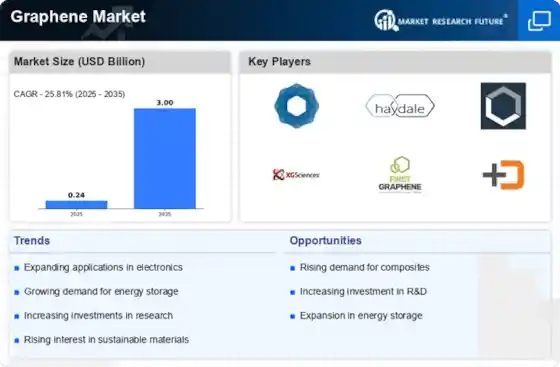
As per Market Research Future analysis, the Graphene Market Size was estimated at USD 0.24 Billion in 2024. The industry is projected to grow from USD 0.3019 Billion in 2025 to USD 3.0 Billion by 2035, registering an impressive CAGR of 25.8% during the forecast period (2025–2035). This growth reflects increasing commercialization, falling production costs, and expanding industrial use cases.
(Source: Market Research Future – Graphene Market)
Industry Overview
Graphene is increasingly positioned as a next-generation industrial material due to its unique combination of mechanical, electrical, and chemical properties. Industries are adopting graphene to improve product performance, durability, and efficiency while supporting lightweight and sustainable design goals.
Key industrial advantages of graphene include:
-
Exceptional tensile strength (stronger than steel)
-
High electrical and thermal conductivity
-
Lightweight and flexible structure
-
Chemical stability and corrosion resistance
These characteristics make graphene highly suitable for advanced industrial applications.
Industry Drivers
Several factors are driving the rapid expansion of the graphene industry globally.
Major growth drivers include:
-
Rising demand for advanced electronics: Use in semiconductors, flexible displays, sensors, and conductive inks
-
Growth in energy storage solutions: Adoption in lithium-ion batteries, supercapacitors, and fuel cells
-
Automotive and aerospace innovation: Lightweight composites for improved fuel efficiency
-
Construction and coatings: Enhanced strength, anti-corrosion, and thermal properties
-
Increased R&D investments: Strong academic–industrial collaboration accelerating commercialization
Additionally, government support for nanotechnology research and sustainable materials further strengthens industry momentum.
Regulation and Policy Landscape
The graphene industry operates within broader nanomaterials and advanced materials regulatory frameworks. While graphene is not heavily restricted, regulatory bodies emphasize safety, environmental impact, and standardization.
Key regulatory considerations include:
-
Worker safety during graphene production and handling
-
Environmental impact assessments for large-scale manufacturing
-
Development of international standards for graphene quality and classification
-
Compliance with chemical safety regulations across regions
Clear regulatory guidelines are expected to support long-term industrial adoption and investor confidence.
Industry Objectives
The primary objectives of companies operating in the graphene industry focus on scalability, cost efficiency, and commercial viability.
Core industry objectives include:
-
Reducing production and processing costs
-
Achieving consistent, high-quality graphene output
-
Expanding industrial-scale manufacturing capabilities
-
Increasing adoption across high-volume industries
-
Developing application-specific graphene solutions
Meeting these objectives will be critical for transitioning graphene from a specialty material to a mainstream industrial input.
Get a Sample PDF Brochure of the Report @ https://www.marketresearchfuture.com/sample_request/2987
Key Players
The graphene industry features a mix of established material science companies, nanotechnology specialists, and innovative startups.
Notable players include:
-
Graphenea
-
First Graphene
-
Directa Plus
-
Haydale Graphene Industries
-
XG Sciences
-
Applied Graphene Materials
These companies focus on product innovation, partnerships, and expanding application portfolios to strengthen their market position.
Challenges
Despite strong growth potential, the graphene industry faces several challenges that could impact adoption.
Key challenges include:
-
High production costs for high-quality graphene
-
Difficulty in large-scale, uniform manufacturing
-
Limited awareness among end-use industries
-
Technical integration issues in existing manufacturing processes
-
Lack of standardized quality benchmarks
Overcoming these barriers will be essential for unlocking full industrial-scale demand.
Buy Now @ https://www.marketresearchfuture.com/checkout?currency=one_user-USD&report_id=2987
Market Segmentation
The graphene industry can be segmented based on product type, application, and end-use industry.
By Product Type:
-
Graphene oxide
-
Reduced graphene oxide
-
Few-layer graphene
-
Monolayer graphene
By Application:
-
Energy storage
-
Electronics
-
Composites
-
Coatings
-
Sensors
By End-Use Industry:
-
Electronics and semiconductors
-
Automotive and aerospace
-
Energy and power
-
Construction
-
Healthcare and research
Energy storage and electronics remain the leading application segments due to high performance requirements.
Future Outlook
The future outlook for the graphene industry remains highly optimistic. As manufacturing technologies improve and costs decline, graphene adoption is expected to accelerate across high-volume industrial applications.
Key future trends include:
-
Commercial-scale graphene battery production
-
Integration into electric vehicles and renewable energy systems
-
Expansion of graphene-enhanced construction materials
-
Growth in flexible and wearable electronics
-
Increased global standardization and certification
By 2035, the industry’s valuation of USD 3.0 Billion reflects graphene’s transition from laboratory innovation to industrial necessity.
Browse More Reports:
Aluminum Cans Recycling Market
Copper Ammonium Carbonate Market
Extruded Polylactic Acid Fiber Market
Reusable Corrugated Plastic Boxe Market
Source: PR News Releaser
